Removing a streamer
Three actions take a machine out, and they differ in how much they leave behind. All three are in the streamer's row in the registry; Purge appears next to the Deleted streamers section once something is in it.
Revoke
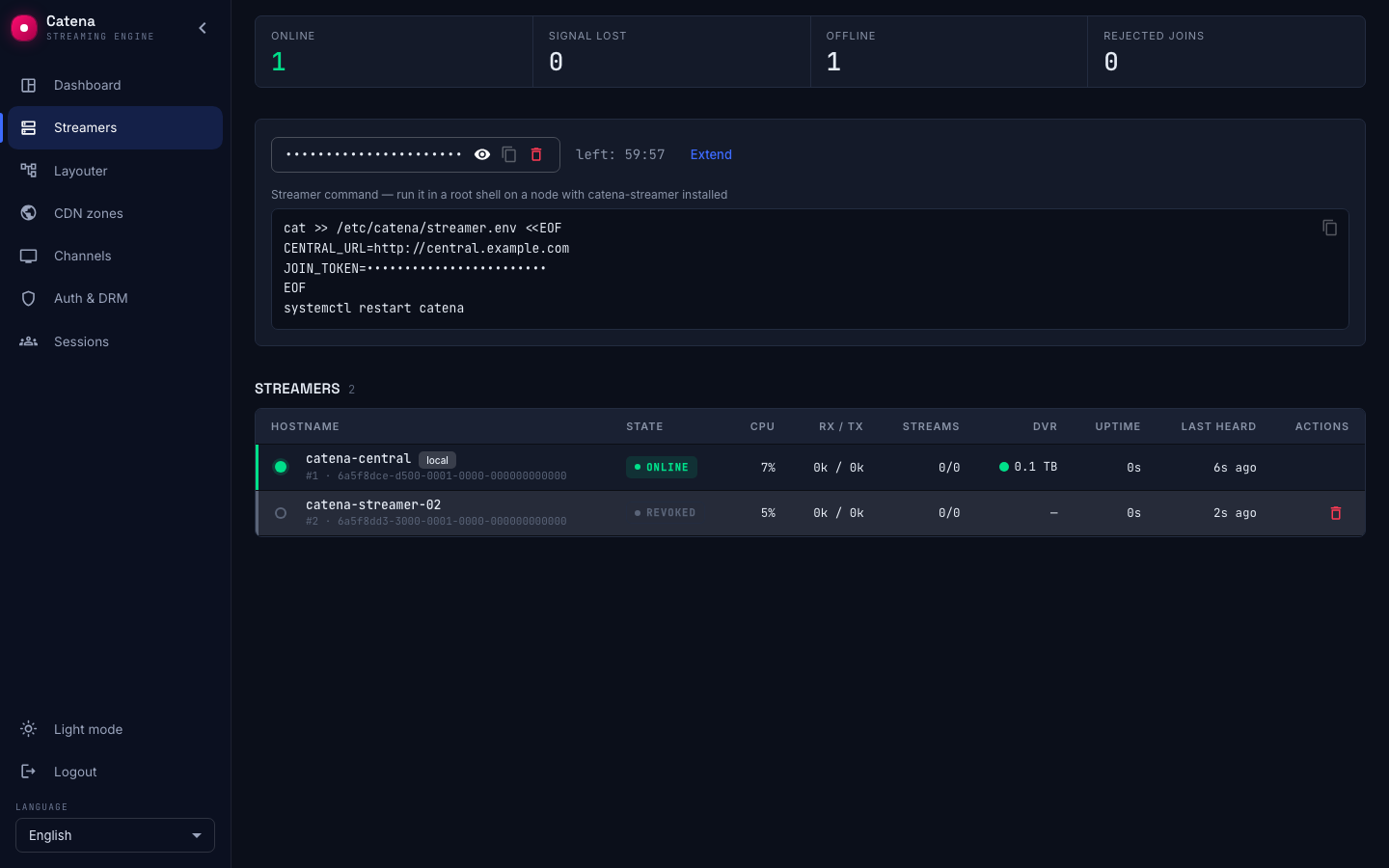
The streamer's node_key stops authenticating. The record stays in the registry, marked Revoked, with its history intact.
Use it when you want a machine locked out rather than forgotten — a compromised host, or one you are about to rebuild. The machine keeps running and keeps its streams until it next tries to talk to central, at which point it is refused.
Revoking is not reversible from the registry: a machine that has been revoked joins again the way a new one does, with a fresh join token, and arrives as a new record with a new node_id.
Delete
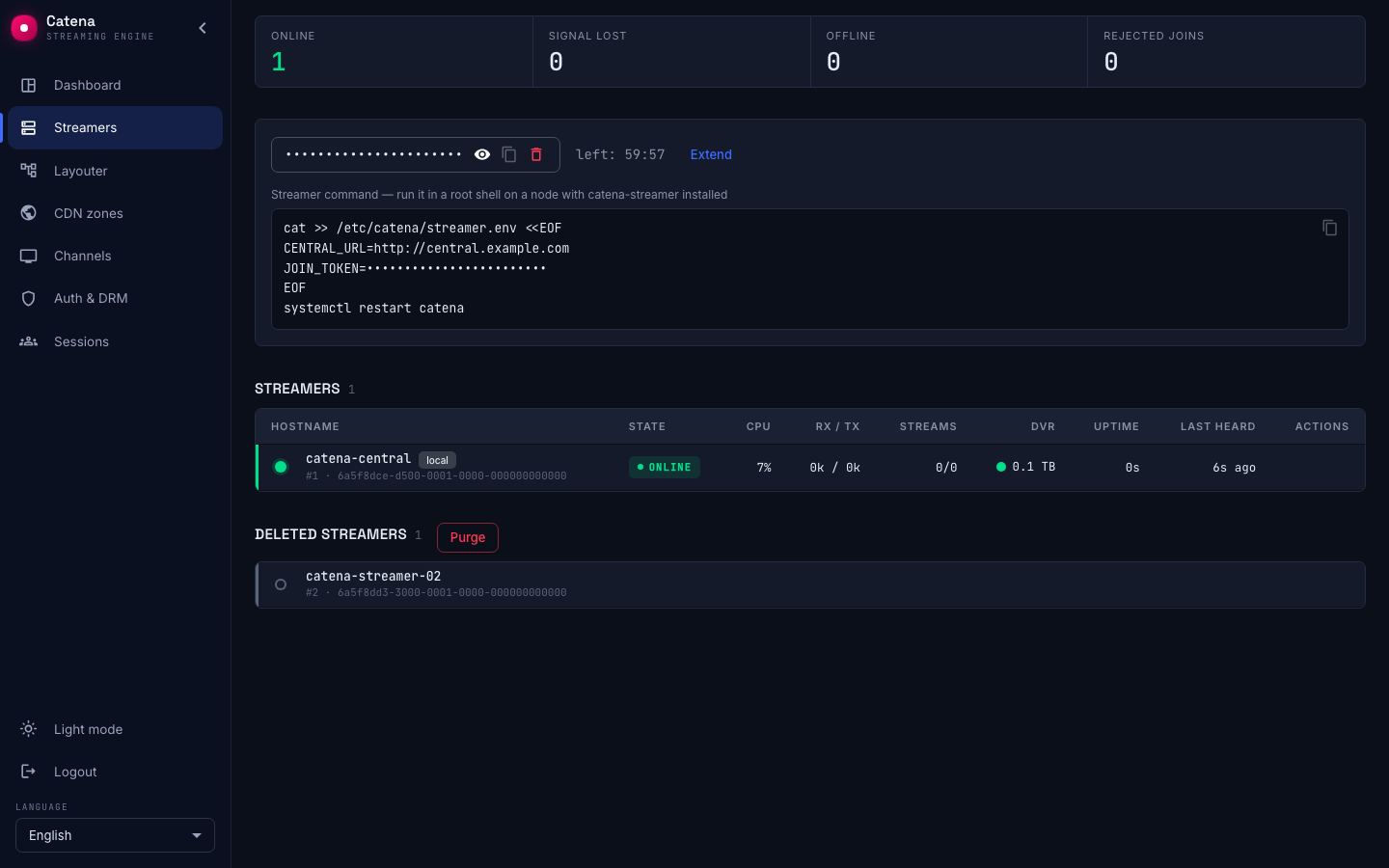
The streamer moves to Deleted streamers, its config is removed, and its streams are re-planned onto the remaining streamers.
The record survives as a tombstone rather than disappearing. That is deliberate: past placement decisions keep referring to it, so the layouter's history stays readable after the machine is gone.
Deletion also reaches the machine itself. The next time it syncs, central refuses it, and the streamer drops out of managed mode instead of continuing with a configuration nobody maintains.
Purge
Removes every tombstoned record permanently. This is the only irreversible step of the three, and it applies to all deleted streamers at once — there is no per-record purge.
After a purge, a machine that used to be in this installation is indistinguishable from one that never was.
What is not offered
None of the three is available for the local streamer — the one running inside central's own process. It has no key to revoke, and deleting it would mean deleting the machine that holds the registry. The local streamer covers what you can do instead.
Before you remove a machine
Deleting re-plans the streams, but nothing else moves on its own:
- The archive stays on the machine. DVR recordings are on that streamer's disks, and removing the streamer from the registry does not copy them anywhere. If the archive matters, deal with it before you delete.
- Viewers on that machine are cut. Sessions served by it end when it stops; players reconnect and are routed to whatever streamer central picks next.
- Capacity has to exist somewhere else. Re-planning places the streams on the remaining streamers whether or not they have room for them.