CDN zones
When streamers stand in different cities and networks, the viewer should be sent to the near one. That is what CDN zones are for: the viewer's IP is matched to a zone by CIDR routes, and the playback balancer picks a live streamer of the matched zone that has the stream.
While there are no zones at all, the default behavior applies: players are sent to the edge streamers if the cluster has any, otherwise to the streamer where the stream is ingested. For an installation in one network that is usually enough — zones arrive together with geography.
How the streamer is picked
- The viewer's IP is compared against the CIDR routes of all zones; the longest matching prefix wins.
- In the winning zone, a live streamer carrying the stream is looked for.
- If there is none — the viewer is taken to that zone's fallback zone, if one is set.
- From there — the streamer's delivery mode: with a public payload URL the viewer gets a redirect straight to the machine, without one central proxies the media through itself (see the streamer settings).
Create a zone
The CDN zones screen → Create zone, a short name like eu or nyc.
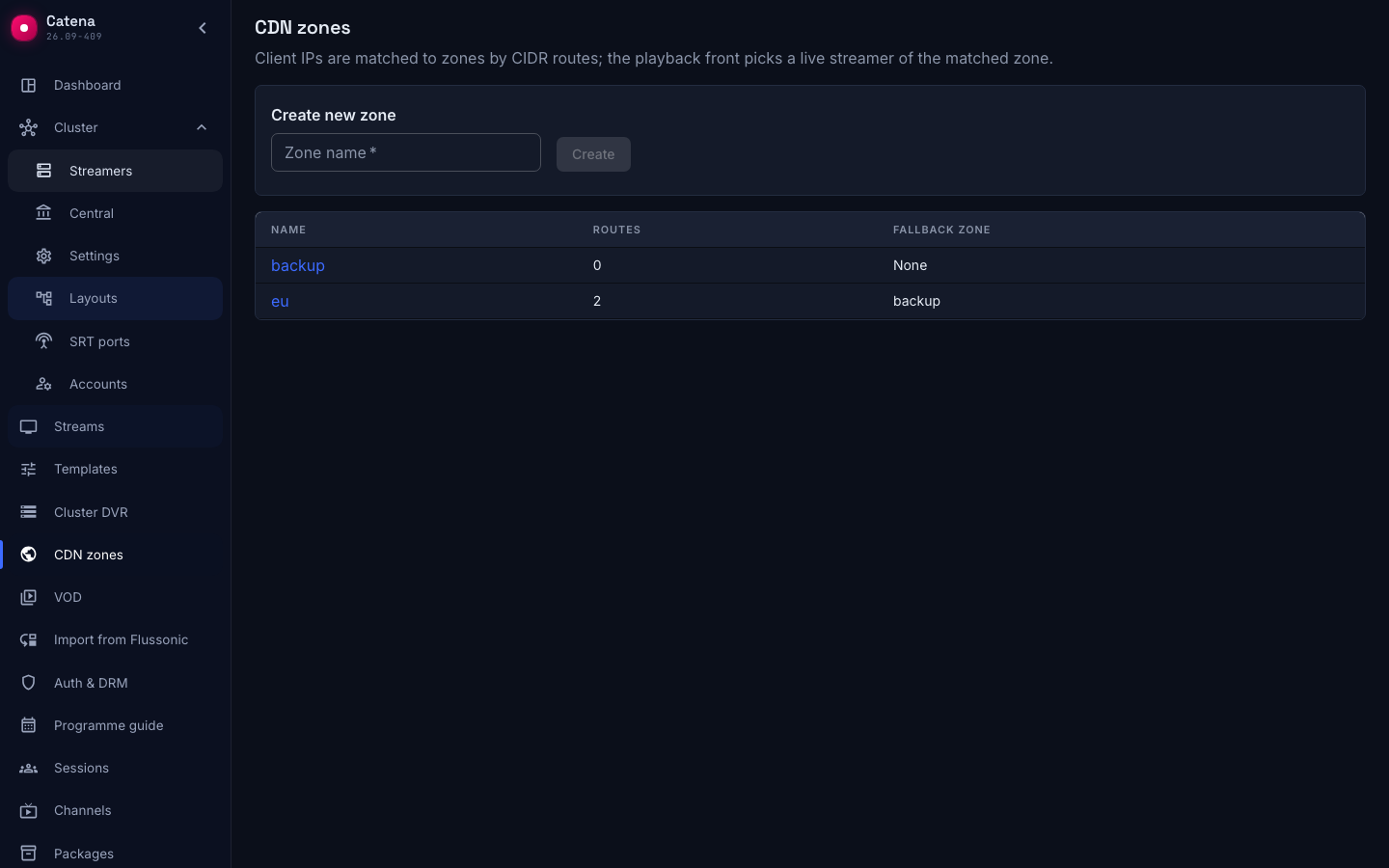
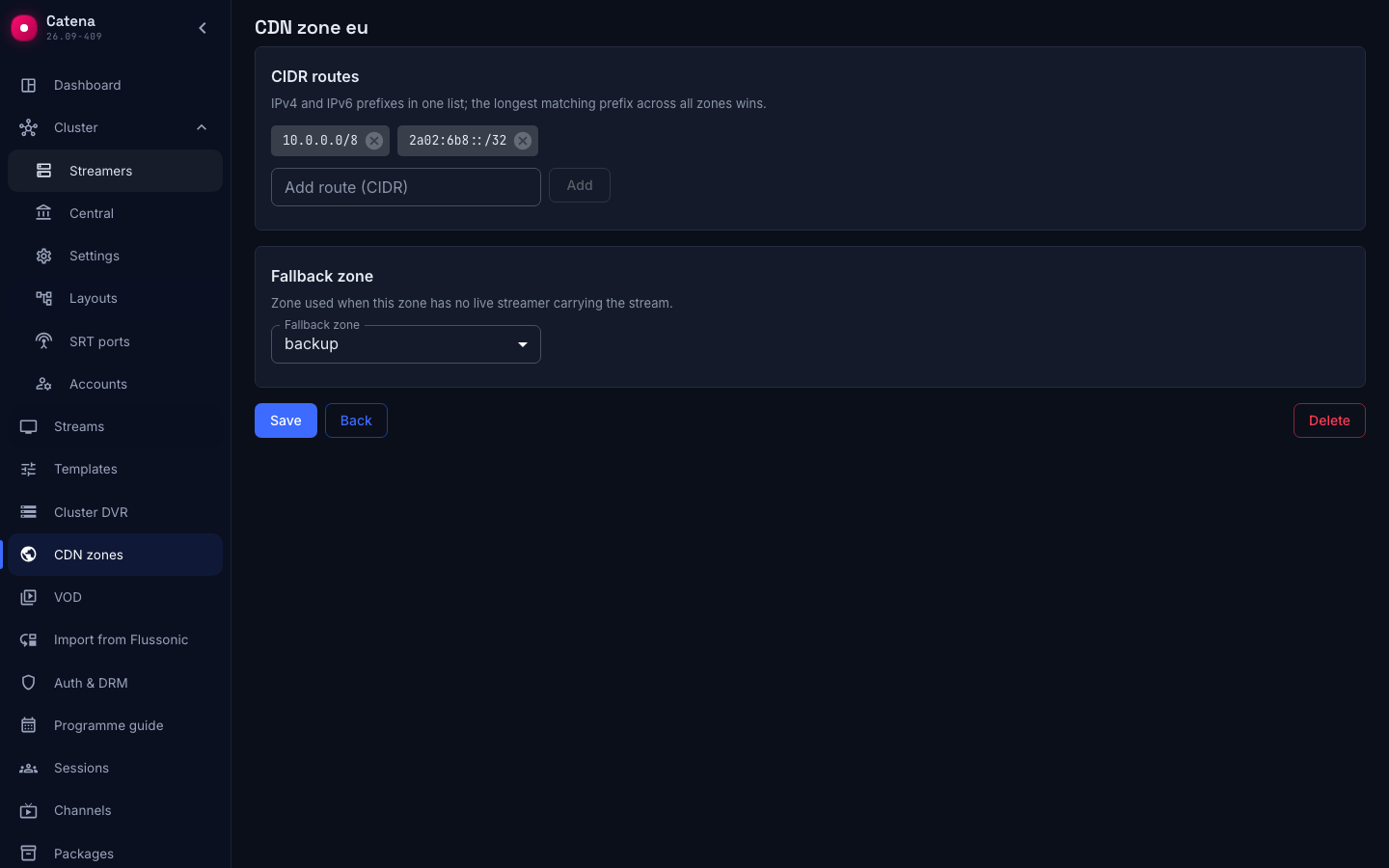
The zone editor opens:
- CIDR routes — IPv4 and IPv6 prefixes in one list:
10.0.0.0/8,2a02:6b8::/32. A chip per prefix; the form rejects an invalid CIDR. - Fallback zone — where to take the viewer when this zone has no live streamer with the stream.
Press Save. If the zone was edited in parallel, the editor shows the same conflict banner as the other forms: re-read or overwrite.
Assign the streamers
A zone without streamers routes nothing. Membership is set on the streamer's side: the CDN zone field in its settings. In the registry the zone shows next to the machine's name.
If viewers end up in the wrong place
- A viewer lands in someone else's zone. Check the routes: the longest prefix among all zones wins — a more specific route of another zone overrides yours.
- The zone matched but the viewer went elsewhere. No live streamer with the stream was found in the zone — the fallback zone or the default behavior kicked in. Look at the registry: are the zone's machines alive and is the stream placed on them.
- Viewers get central's address instead of a streamer's. The streamer has no public payload URL — central proxies the media. A working mode, but all the traffic flows through central.