Administrators
Access to the Mcaster panel runs on named accounts: everyone who opens the panel has their own login, their own password and their own role. The machine keeps that list itself — it is its own staff list, and it overlaps with nothing else.
Administrators are not viewers, in particular. The playback sessions under Sessions are the people watching the channels, and they have nothing to do with access to the panel. The two lists must not be mixed: they mean different things, they live for different lengths of time, and a mistake in one costs something entirely different from a mistake in the other.
The first login
A freshly installed machine knows no administrators yet — there is nobody to create them. There is exactly one way in: the static credentials the package generated during installation. The login is admin, the password is the value of EDIT_AUTH_PASSWORD in /etc/mcaster/secrets.env (the file is readable by root only, see Installation).
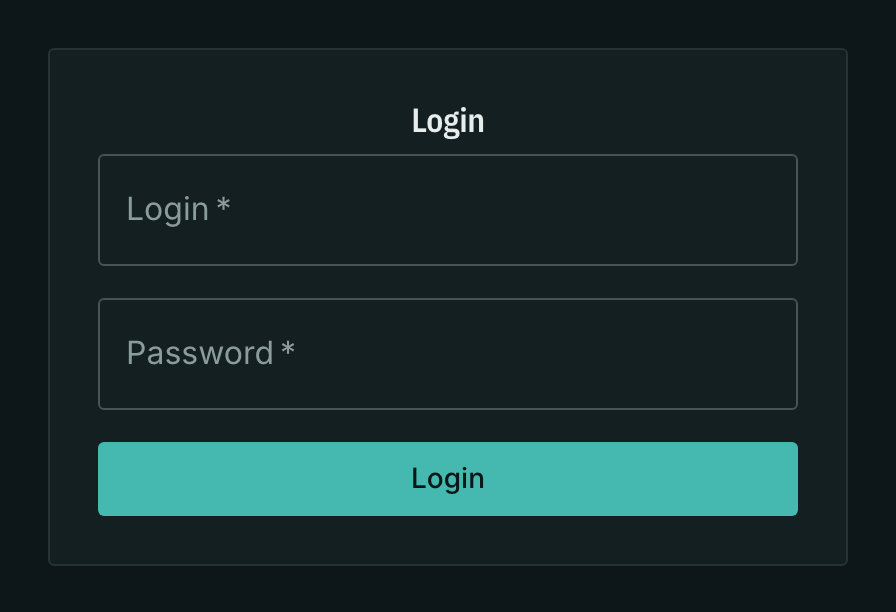
The panel accepts those credentials and immediately asks for a named account:
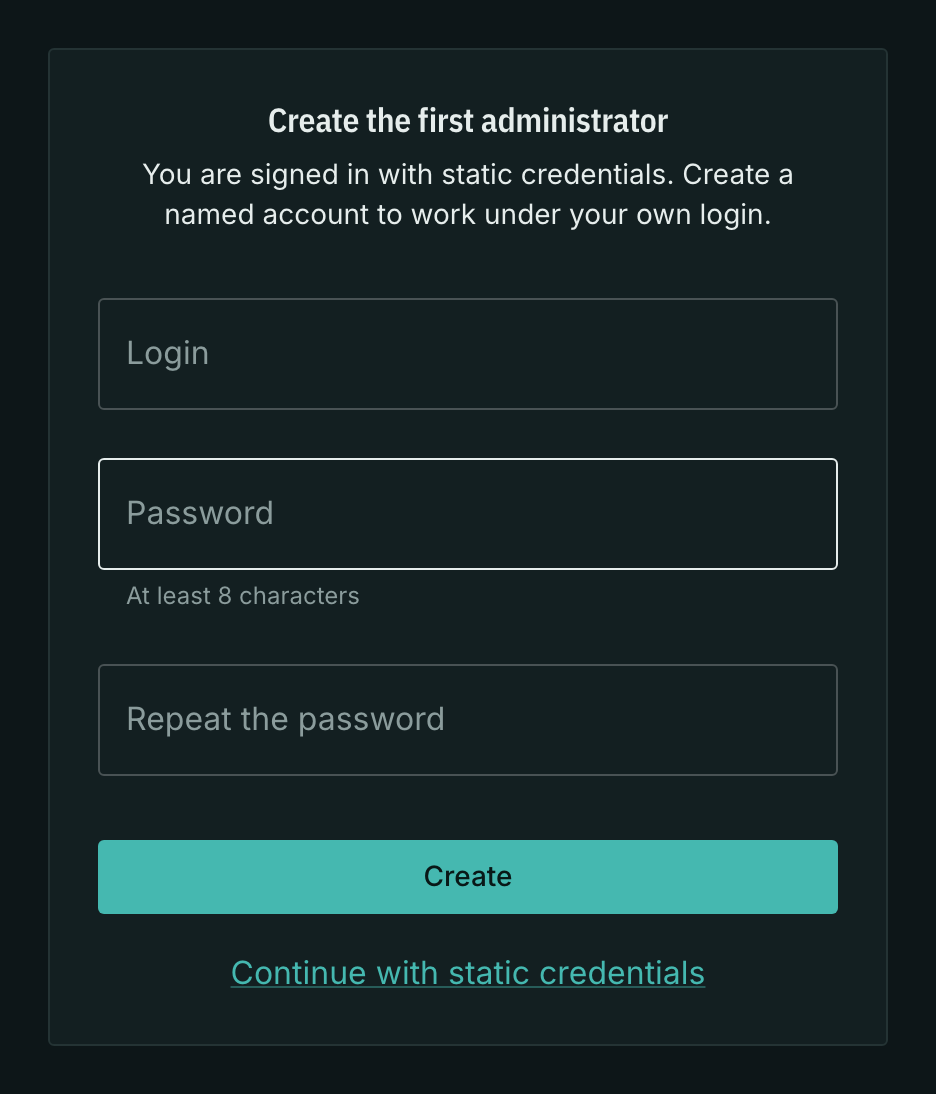
The account created here gets the superadmin role — it is the only role that manages the other administrators. Work under it from now on rather than under the static credentials. The reason is simple: the static credentials are shared, and they answer no question about who did what.
The Continue with static credentials link skips the step. The offer comes back at the next login — the panel keeps reminding you while the administrator list is empty.
Static credentials are the break-glass entry
The static credentials do not go away once administrators exist. That is deliberate: they stay as the emergency entry for when named accounts do not help — the only superadmin has left the company, forgotten their password, or had their account switched off by mistake. Logging in with them, you can always create a new superadmin.
Treat them the way you treat the key to the server room:
- the password lives in
/etc/mcaster/secrets.env, and only root can read the file; - it is changed in that same file, and the machine picks the new value up when the service is restarted;
- anyone who needs day-to-day access gets a named account instead of being handed this password.
The Accounts section
The section is visible to a superadmin only. For the other roles it is neither in the menu nor reachable by a direct link — the refusal comes from the server, and the menu merely stops offering what the role would not get anyway.
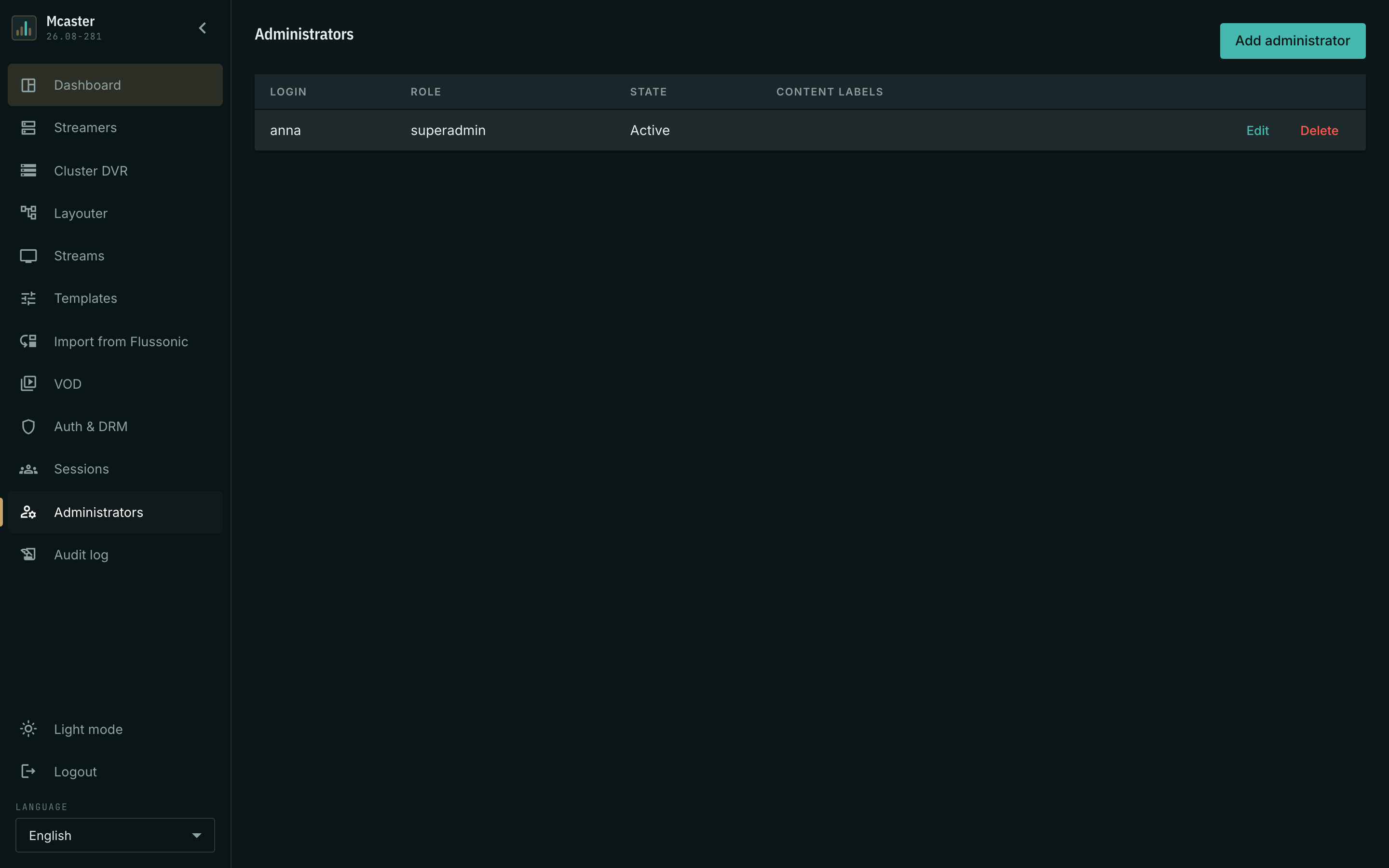
The list has three columns, answering three questions:
- Login — the name the person signs in under.
- Role — what they are allowed to do.
- State — Active, Temporary password (the account exists, but its owner has not yet replaced the password they were handed) or Disabled (the account is there, the access is not).
Roles
An administrator has exactly one role, chosen from four:
- superadmin — everything, including this section and replacing the licence document.
- admin — all the everyday work: streams, templates, cluster machines, the archive, playback protection. Exactly two things are closed: the Accounts section and replacing the licence.
- viewer — observation only: the dashboard and the sessions. Configuration is closed entirely, reading included.
- security — supervision: the audit log and its own account. Settings and observed state are closed entirely; the journal, the other way round, opens to neither admin nor viewer.
The viewer deserves a note, because forbidding reads of the configuration looks excessive. It is not: configuration documents carry secrets by construction — passwords for someone else's sources, keys, machine credentials. A document cannot be handed over with its secrets cut out along the way, so it is not handed to a viewer at all.
The role is checked by the server on every request, not only at login.
Adding an administrator
The Add account button opens the form:
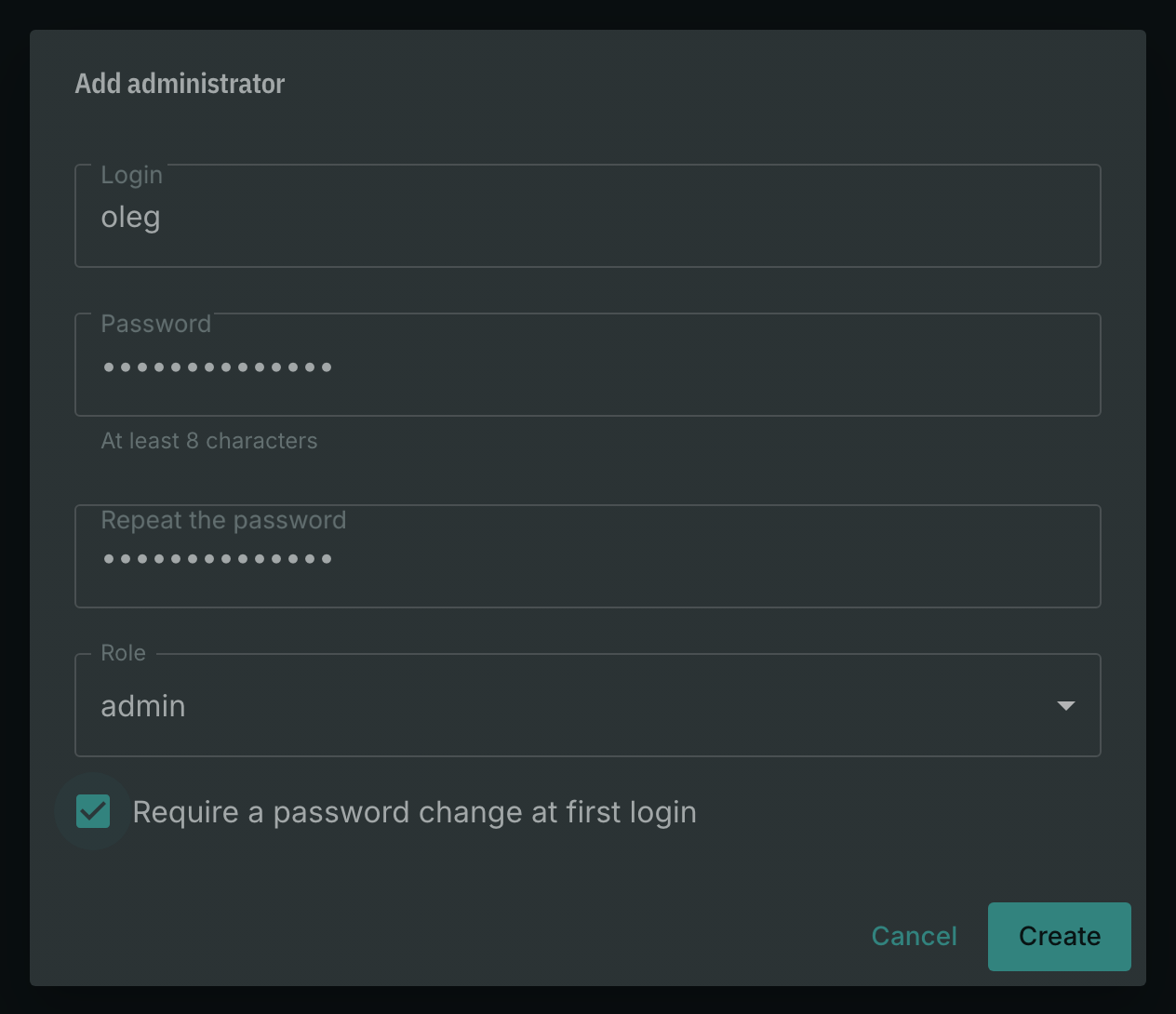
Enter a temporary password here and pass it to the person however you pass passwords. Tick the Require a password change at first login box: a password you invented on someone else's behalf is known to you as well, which means it has stopped being their secret.
The new account shows up in the list in the Temporary password state:
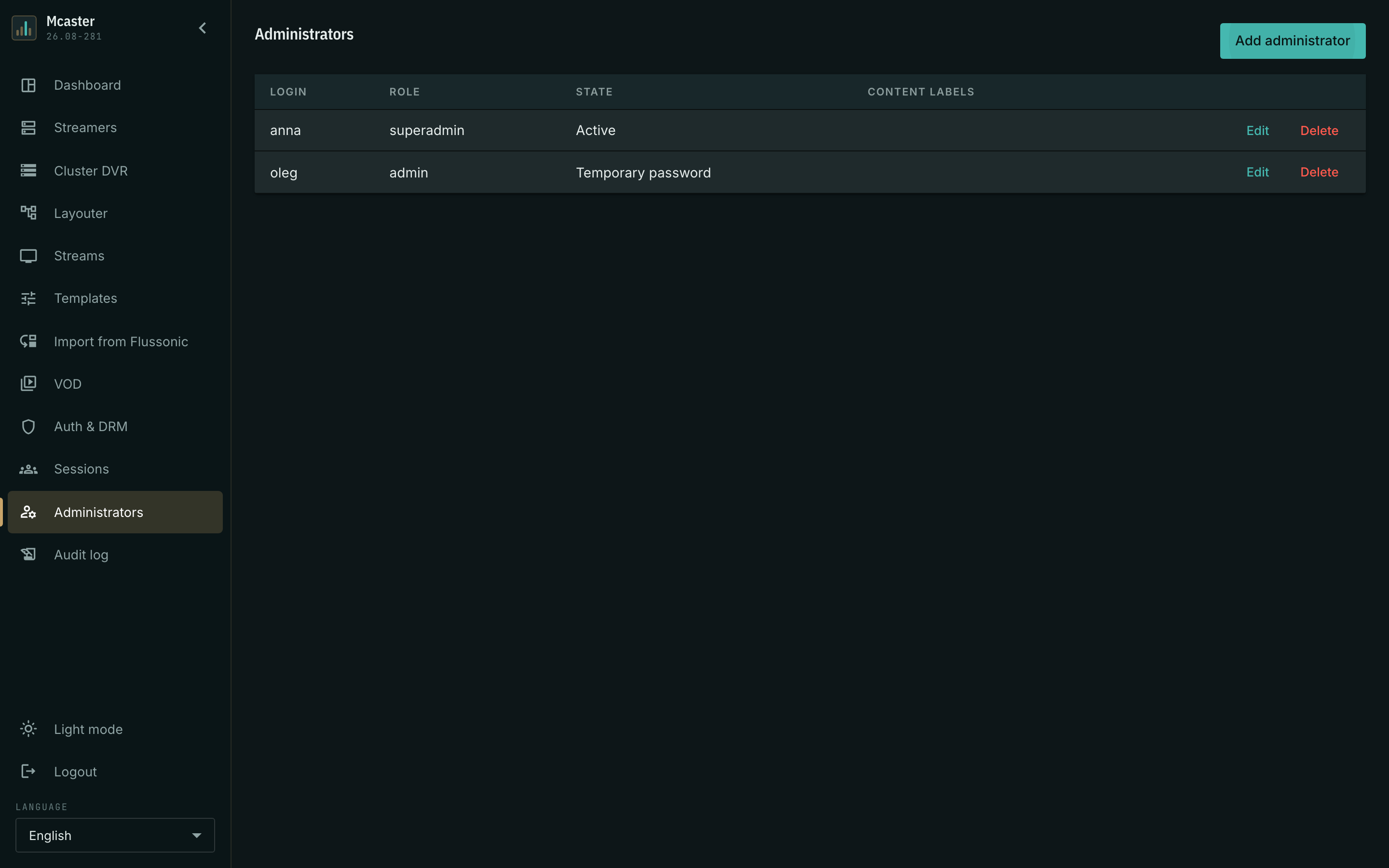
At their first login the owner of that account lands not in the panel but on the password change form:
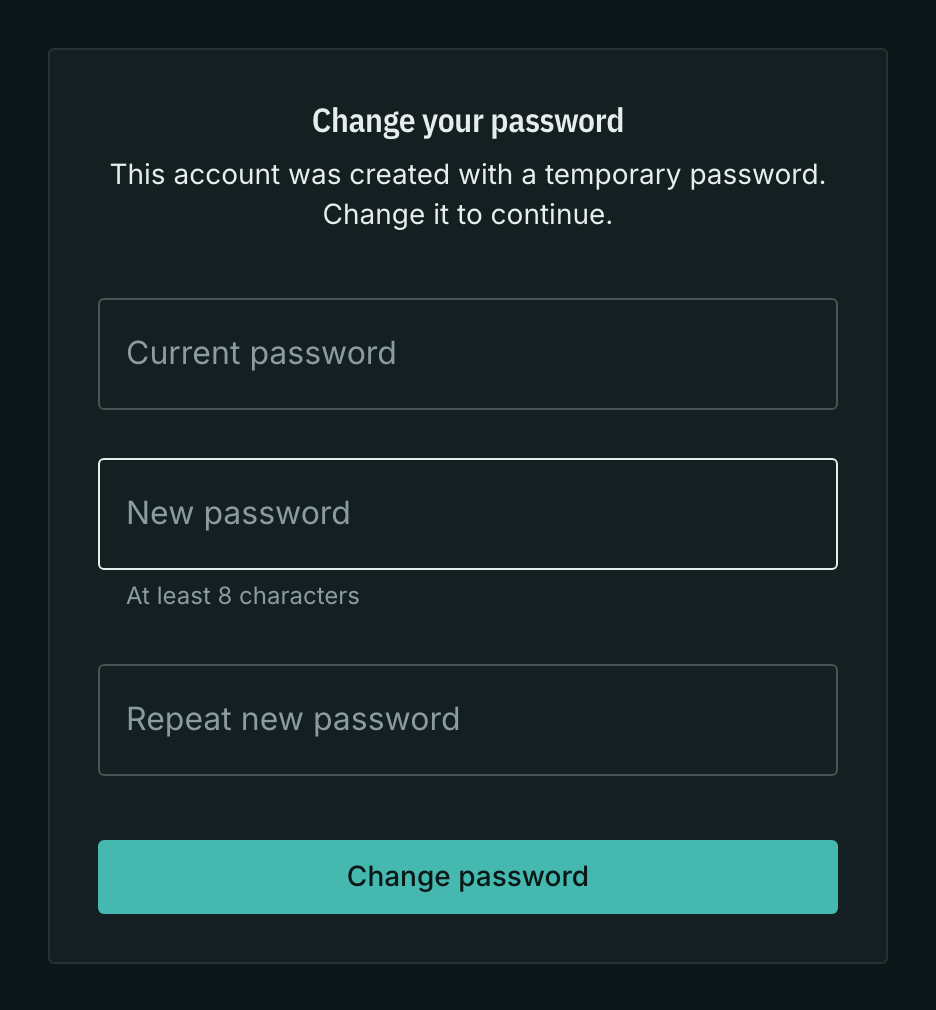
Nothing else opens until the password is changed — that is the server refusing, not a window styled to look strict: knowing the addresses does not help you around the form. Once changed, the person is in the panel straight away, with no second login.
Editing, resetting a password and switching access off
The Edit button in a row opens everything that can be changed on an existing account:
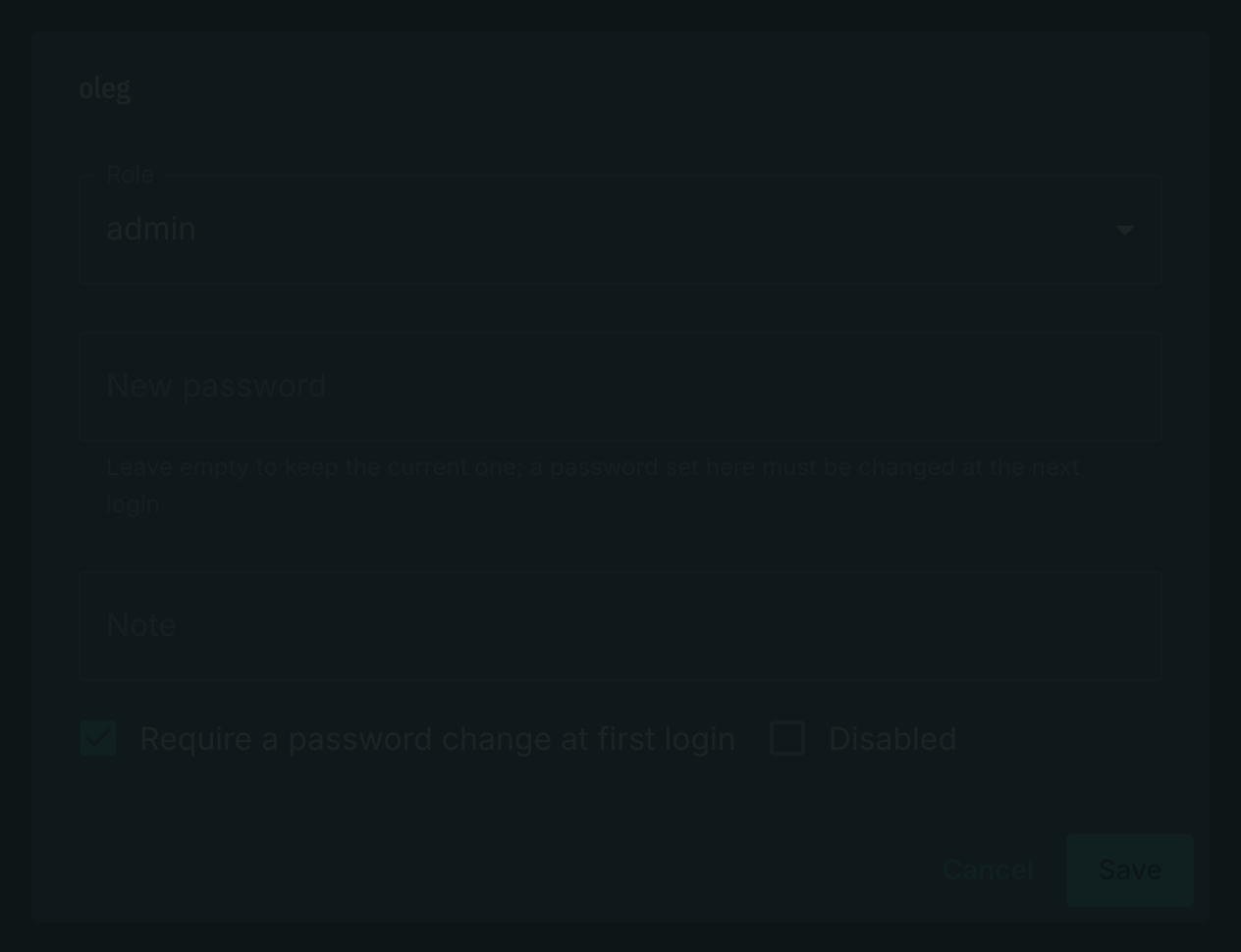
- Role — a new role takes effect immediately: the account's sessions are dropped, and the person signs in again with the new rights.
- New password — this is how you bring back someone who has forgotten theirs. The panel will show nobody their own password, so a forgotten password is not recovered but replaced. The password issued here is temporary as well: its owner changes it at the next login. An empty field means "leave the password alone".
- Note — what this account is for and whose it is. It earns its keep once there are a dozen of them.
- Disabled — access is closed at once, together with any sessions already open, while the account itself stays.
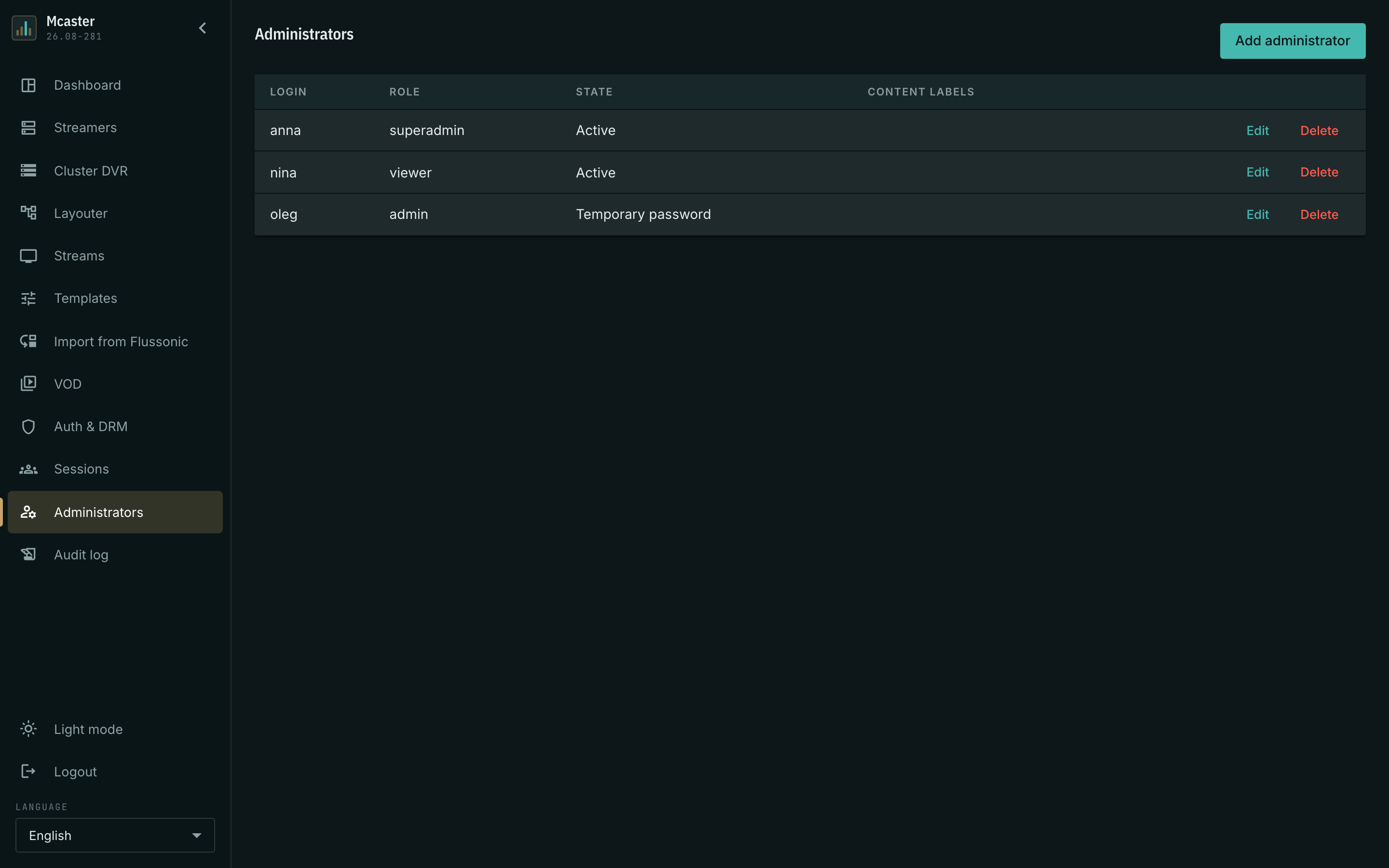
Switching off is what you reach for most of the time: someone has gone on holiday, changed their job inside the company, lost a laptop. The Delete button erases the account for good; delete when the account was created by mistake.
What a viewer sees
Here is the same panel under the viewer role: the menu is down to the dashboard and the sessions, and the configuration sections are not shown.
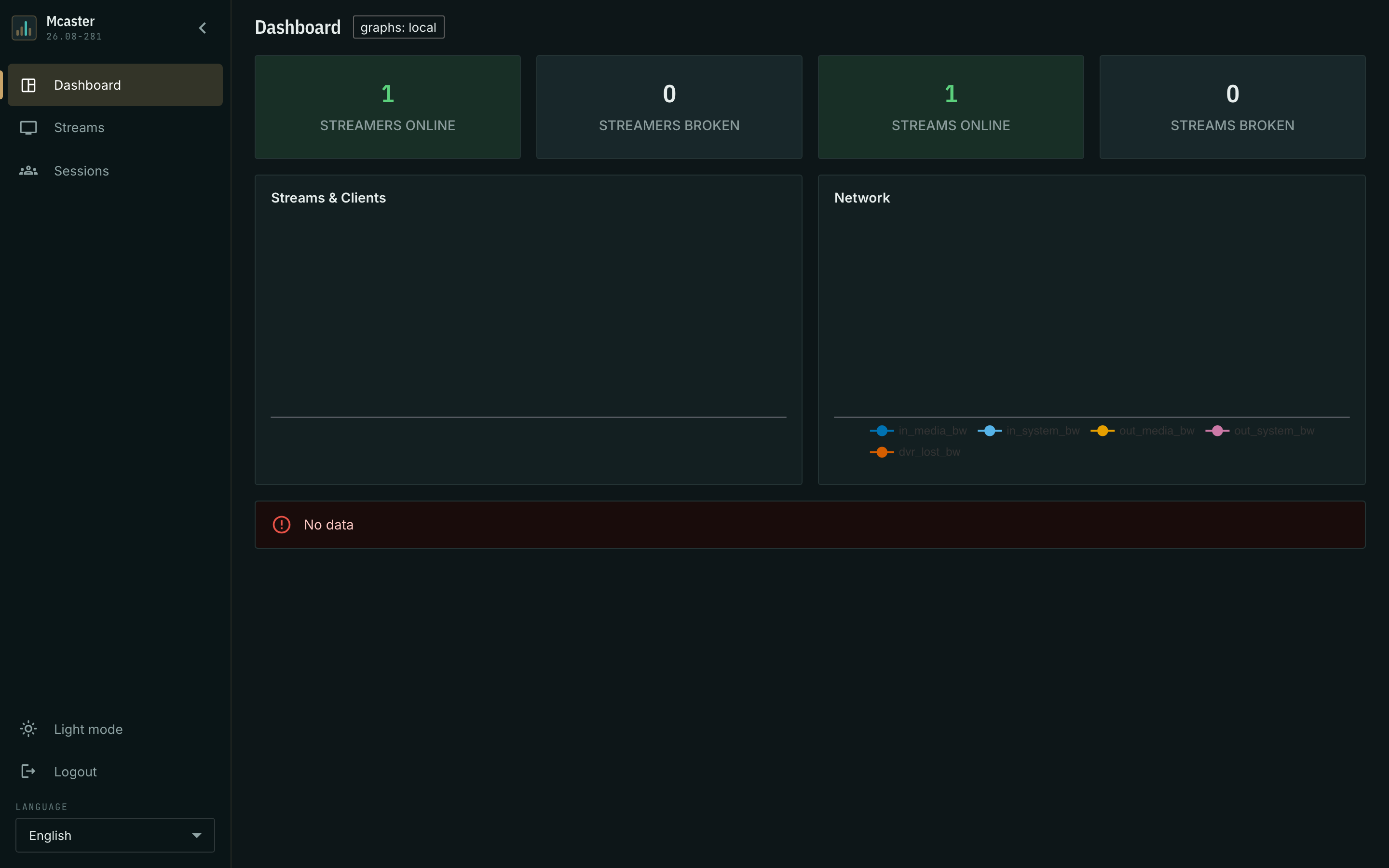
It is a convenient role for a duty shift, and for anyone who needs to see what is going on without changing anything.
The browser session
The panel does not keep the password in the browser. After the login it works from a pass issued by the server, which it renews on its own while the tab is open — you are not asked for the password again during the working day.
The Log out button drops the session on the server, not merely the tab. That matters when you are leaving someone else's machine: closing a tab does not take the access away, logging out does.