Watcher quick start
If your operator or administrator already provides Watcher, start with If Watcher is already installed. For a new installation on your own server, follow the procedure below: it takes you from installation to checking live video and archive on a test camera.
This guide lets you:
- Install Flussonic Watcher on one server (Single mode).
- Add a virtual camera.
- View the archive.
- Connect a mobile app.
For a new installation, you need:
- A Linux computer with Internet access. See the full system requirements.
rootprivileges on the server to install packages and separate storage for archive recording. You will set the Watcher administrator username and password during installation.
If Watcher is already installed
Sign in using the address and account provided by the service administrator. To connect cameras and users, perform these actions in order:
- Open Organizations and select the Organization for the site. If you can create Organizations and need a separate site, create an Organization.
- On the Organization Presets tab, enable the required camera presets. For an existing Organization, check this tab: its existence alone does not mean presets are assigned. The preset determines camera archive and analytics settings; whether changes are available depends on your permissions and service configuration.
- Add a camera, selecting this Organization and a preset available to it. Check live video and recordings for the selected time.
- Add a user to the Organization and assign camera and archive permissions. Organization membership alone does not grant viewing rights.
- In a separate browser window, sign in as that user. Check available cameras and archive viewing depth using the camera viewing guide. If access is limited by folder, also check that cameras in other folders are not visible to this user.
If a required action or preset is missing, ask the service administrator about permissions and available settings.
Installing Flussonic Watcher
To install Flussonic Watcher:
1) On the server where you plan to install Watcher, run:
wget -q -O /etc/apt/trusted.gpg.d/flussonic.gpg http://apt.flussonic.com/binary/gpg.key;
echo "deb http://apt.flussonic.com binary/" > /etc/apt/sources.list.d/flussonic.list;
apt update;
apt install flussonic-watcher;
2) The installer will ask you to set the administrator username and password and the archive storage path.
Enter the requested information and wait for installation to complete.
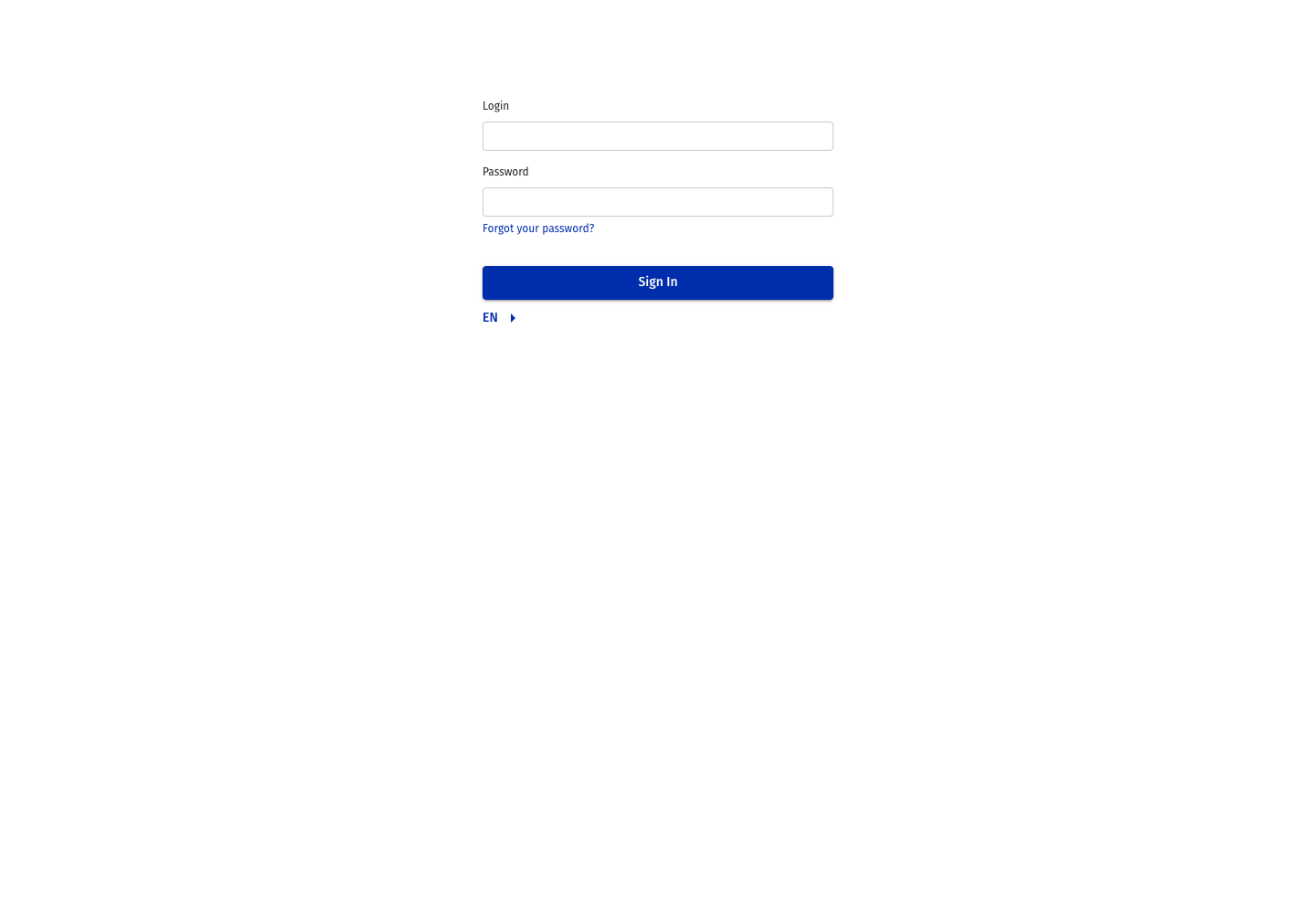
3) Open the Watcher web interface at http://(Watcher server address). Enter the administrator username and password set during installation and click Sign in. The page opens in the browser language; change it with the globe switcher below the button.
Single-server installation is now complete. See the full Watcher Cluster and Single installation instructions.
Adding a virtual camera
A virtual camera is a software video stream that Watcher can receive at fake://fake. Use this camera for testing settings and video and audio operation without a physical camera.
To add a virtual camera:
- Select My cameras in the main menu and click Add camera.
- In Single or cloud Watcher, Add camera opens the manual addition form.
- Fill in Title and set Stream URL to
fake://fake. - Set DVR Depth to a period, such as one day, to enable archive recording.
- Save the camera.
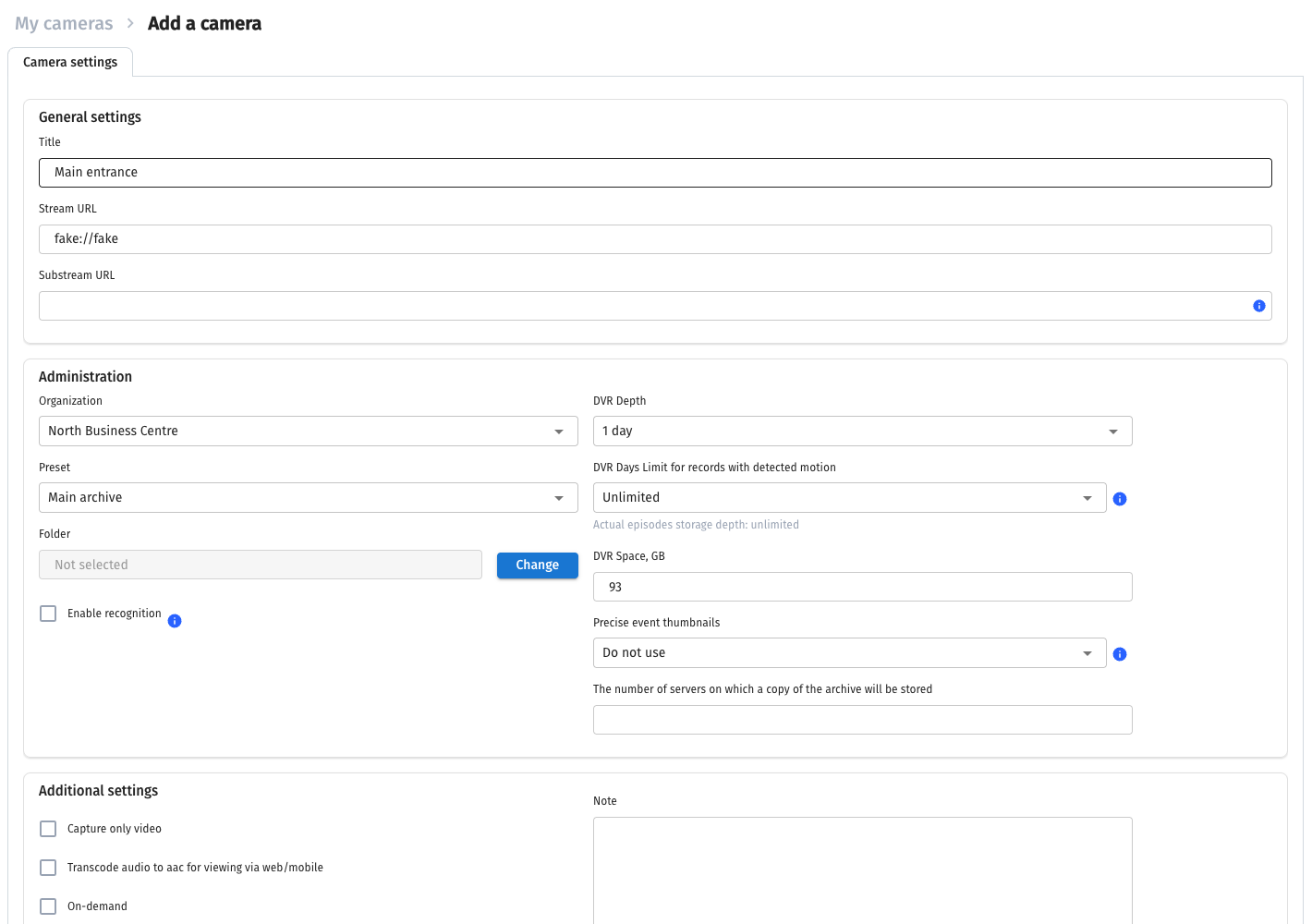
This virtual camera procedure applies to Single and cloud Watcher. On a local NVR, select I know the camera's network address for a physical camera to open the ONVIF wizard; a local administrator also has Find cameras on the network.
After saving, wait for the camera image. If it does not appear, check camera status and streamer availability.
You can also watch live video here or open it on a full page using Go to player.
The virtual camera has been added. See Adding cameras for other methods.
Viewing the archive
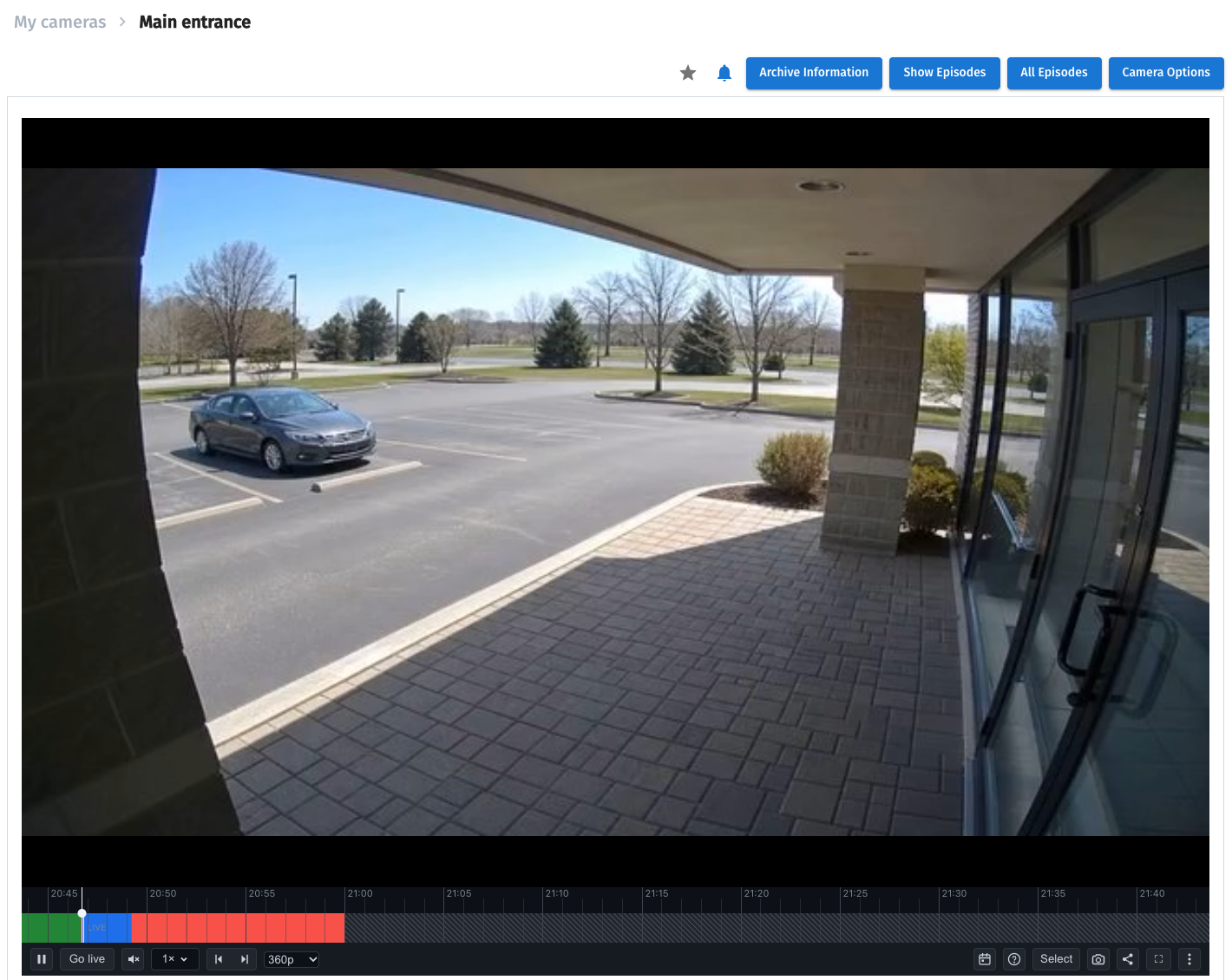
To view the archive, open My cameras and click the required camera tile. The player opens in live video mode.
If the camera has an archive, green segments appear on the timeline. Click the required point in a green segment to play the archive from that time.
See player and playback controls for details.
Connecting a mobile app
Watcher provides two kinds of mobile app:
- Mobile app from App Store or Google Play. It is convenient for adding cameras.
- PWA web app, installed using Add to Home Screen in the browser menu. It opens the mobile web interface; its menu differs from desktop.
To sign in to the native app, you need Operator ID, the unique identifier of your Watcher. To obtain Operator ID:
- In a browser, open your Watcher's public (external) URL accessible from the Internet. Do not use a local IP address: Watcher will not be able to obtain Operator ID, and the mobile app will not connect to it.
- Sign in to Watcher as an administrator.
- Go to Settings → Mobile app and agents and click Get Operator ID and update status.
- Your Operator ID appears in the Operator ID field.
After updating status, check the operator identifier and connection check results.
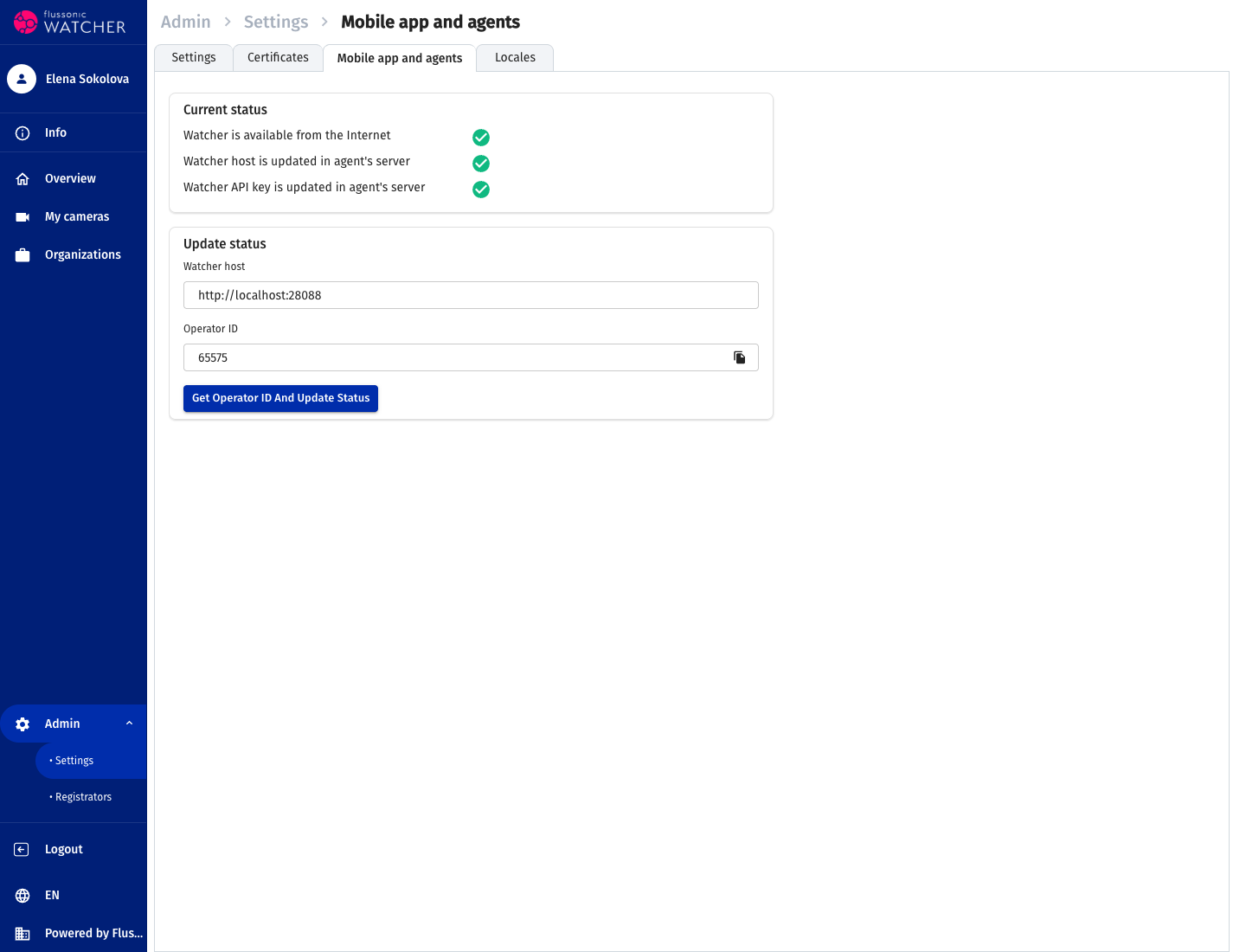
With Operator ID, you can sign in to the mobile app and see the virtual camera added earlier.