Adding cameras
Add the camera to the required organization, then check video and recording. First confirm you may manage cameras in that organization and that the device receiving video has network access to the camera.
Choose a workflow:
- You have an RTSP link and use Single or cloud Watcher — add manually.
- You know an ONVIF camera's IP and use Single or cloud Watcher — add by IP.
- You need to discover ONVIF cameras on the management server network — use camera discovery. Watcher administrator permissions are required.
- You are adding to an NVR — choose I know the camera's network address in Add camera. On a cloud-connected NVR, follow the five-step wizard. Administrators in the local interface can also use Search cameras in the network; see NVR cameras. The short form and manual procedure here describe Single and cloud Watcher.
- You have a CSV camera list — import the list.
- You use a phone with an Agent or Iris camera — choose a method in the mobile application section.
Supported cameras
For direct connection, the camera must provide an RTSP stream in a supported format and be reachable by the streamer.
Accessing cameras behind NAT can be difficult. Flussonic provides:
- Agent, which creates a secure tunnel between the camera and the server it is linked to.
- Iris firmware, which uses built-in Agent to connect the camera and can deliver Wi-Fi credentials to it. Iris also provides Watcher features such as motion detection and PTZ when supported by the hardware.
ONVIF cameras additionally support motion detection, PTZ, automatic network discovery and camera configuration through Watcher.
Supported codecs
Watcher supports H.264 and H.265 (HEVC).
H.265 playback depends on browser support, operating system and available decoders. Test playback on the user's device; use the camera's H.264 stream if HEVC is unavailable.
General camera setup information
Watcher cameras exist within a specific organization. A camera can belong to only one organization. See Managing organizations.
Permission assignment is described under organization camera management.
Add cameras through the Watcher mobile application or web interface. Available methods depend on camera type.
Warning
A camera with a linked Agent is automatically added to its Watcher when it connects to an Internet-enabled network. In some setups, billing integration places the camera in the required organization.
Mobile application methods:
| Menu item / camera type | Iris camera | Agent camera | Ordinary camera |
|---|---|---|---|
| Wi-Fi camera (QR code) |
✅ | ❌ | ❌ |
| Device search (MDNS request) |
✅ | ✅ | ❌ |
| ONVIF search | ❌ | ❌ | ✅ |
Web interface methods:
| Menu item / camera type | Iris camera | Agent camera | Ordinary camera |
|---|---|---|---|
| Add camera (manual RTSP link) |
✅ | ✅ | ✅ |
| Add by IP | ✅ | ❌ | ✅ (ONVIF only) |
| Search cameras | ❌ | ❌ | ✅ (ONVIF only) |
Procedures for these methods follow below.
Note
A large CSV list with camera connection parameters can be imported through the API with camera management permissions in the specified organizations. Web menu import requires a Watcher administrator.
If none of these methods applies, contact support for help identifying possible solutions.
Add a camera through the web interface
The menu beside the add button in Single or cloud Watcher provides adding by IP, camera discovery and CSV import. The main button opens manual setup.
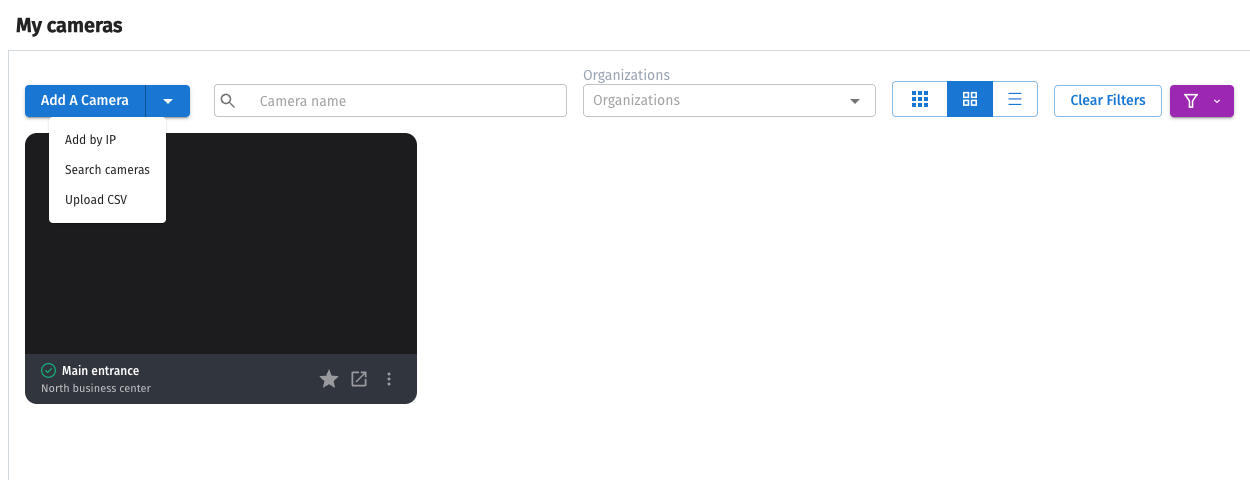
Add a camera manually
Any RTSP-capable camera can be added manually. Manually adding Agent or Iris cameras loses their NAT tunnel connection advantages.
You need the streams' RTSP URLs, which should be provided in camera documentation.
In Single or cloud Watcher, open My cameras → Add camera. The manual form opens:
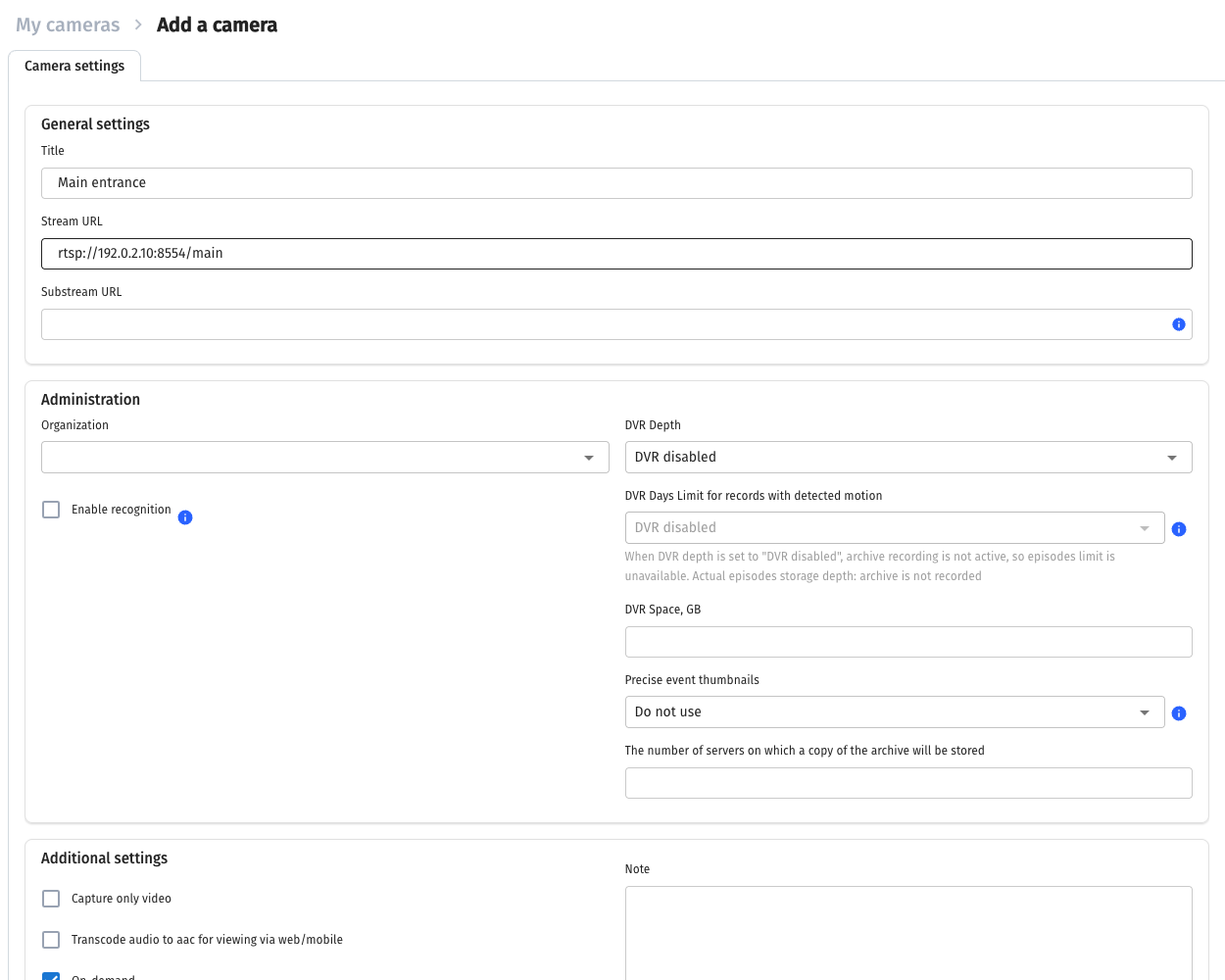
Fill in:
- Title — camera display name.
- Stream URL — required main RTSP address.
- Substream URL — optional additional RTSP address.
- Organization and Folder — camera destination.
- Preset — optional DVR and analytics settings.
- DVR depth, DVR limit in days, DVR space — archive parameters, available with an adjustable preset.
- Enable recognition — face or plate detection when supported by the preset.
- Additional settings — camera enabling, video-only capture, audio transcoding and a note.
- Location — map coordinates and address.
Click Add. The camera appears in My cameras. Open it and check the image. If recording is enabled, wait for a new archive interval and test playback.
Add a camera by IP
The camera must support ONVIF or have Iris firmware and be reachable from the server or NVR performing the check. Local network discovery and checking a known IP are separate operations.
On a cloud-connected NVR, adding by IP opens a five-step Add camera dialog wizard, documented separately. Cloud Watcher and local NVR interfaces without that wizard use the short form below.
To add by IP:
-
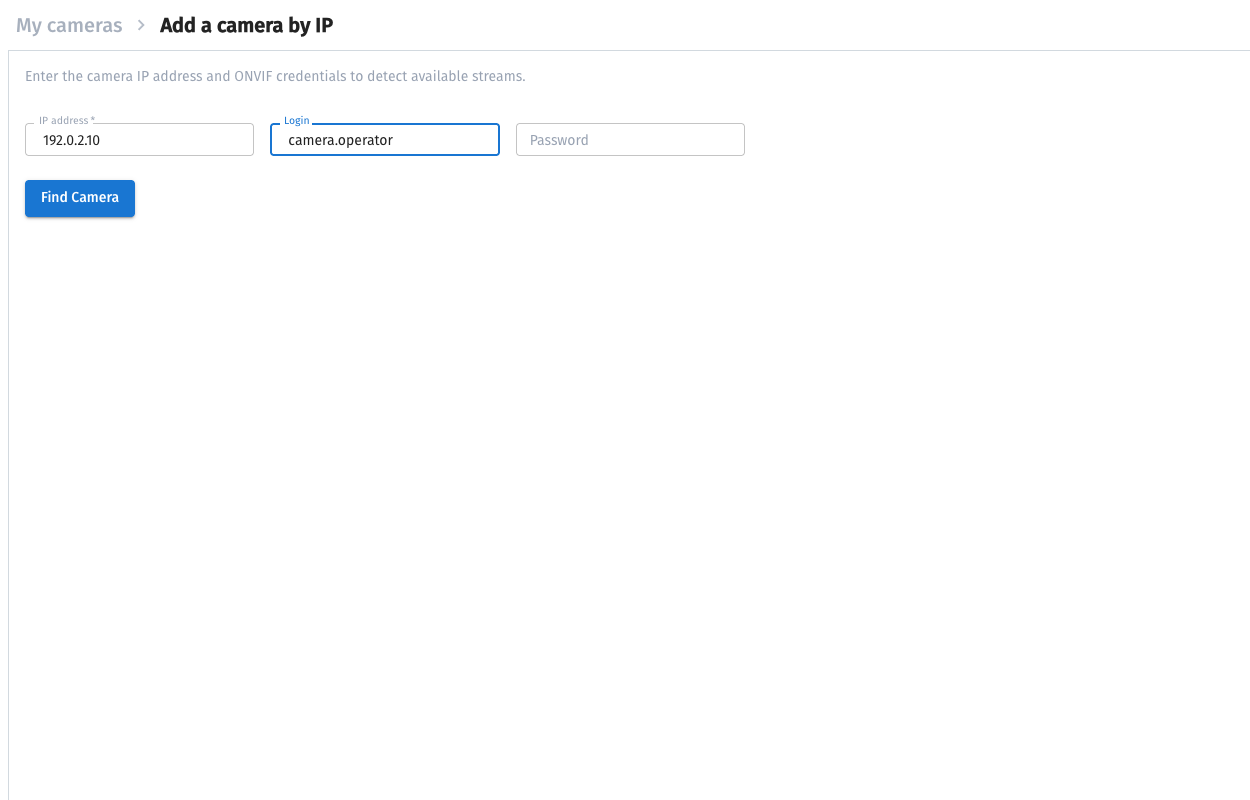
Open My cameras → Add by IP.
-
Enter the camera IP and, if necessary, ONVIF login and password.
-
Click Find camera to check access.
-
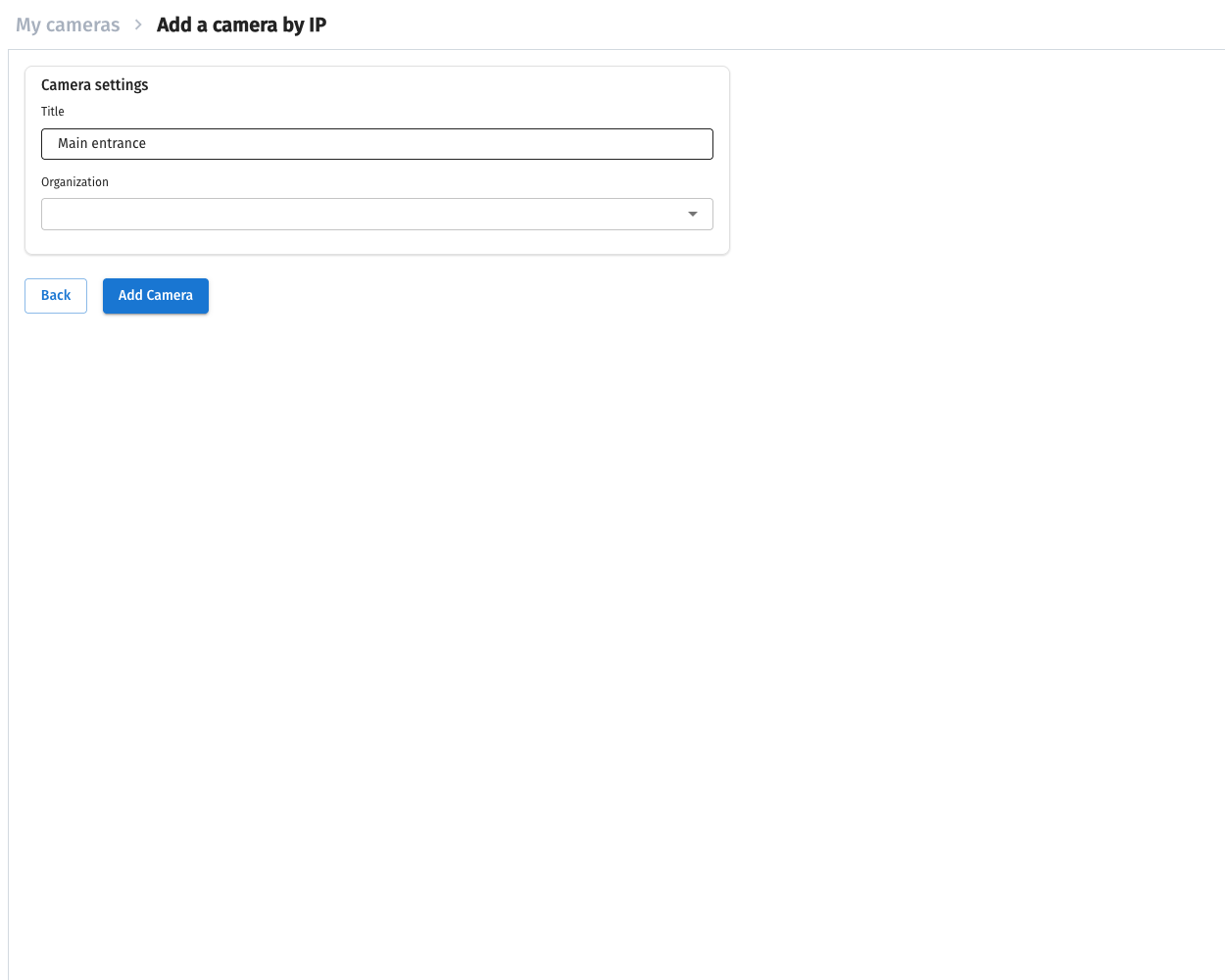
Successful connection opens title, organization, preset and folder fields.
-
Set required parameters. If The camera reported a different video stream address appears, check the address and RTSP port.
-
Click Add camera.
The new camera's settings opens. Set and save any further parameters.
Choose the video stream address
During an IP check, a camera can report a stream address different from the connection address. For example, a camera behind a router reports its internal address. Under Video stream address, choose an address reachable by the streamer or NVR receiving video:
- Connection address — the address used for the check, selected by default.
- Address reported by the camera — use it if the stream is directly reachable there.
- Other address — enter an IP or hostname without a port, such as the router's external address.
Check RTSP port, initially taken from the camera response. With port forwarding, specify the external port forwarded to this camera. The ONVIF check port can differ from RTSP.
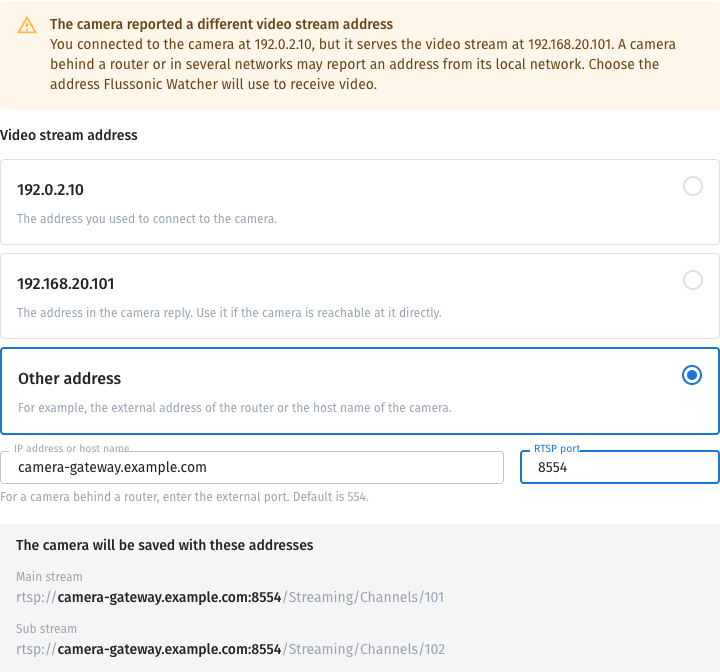
Before saving, check main and substream links under The camera will be saved with these addresses. Open the camera after adding and verify playback.
For discovered cameras, this selection appears in Check video stream addresses. Check address and port for each listed camera, then confirm adding.
Search cameras
Watcher discovers ONVIF-compatible cameras using WS-Discovery, supported by Ubiquity, Samsung and other cameras.
This method requires Watcher administrator permissions.
It searches only the Watcher management server's network. If the streamer and Watcher are in different local networks, use IP setup or manual setup.
To search:
-
Open My cameras → Search cameras.
-
Click Search and wait for completion.
-
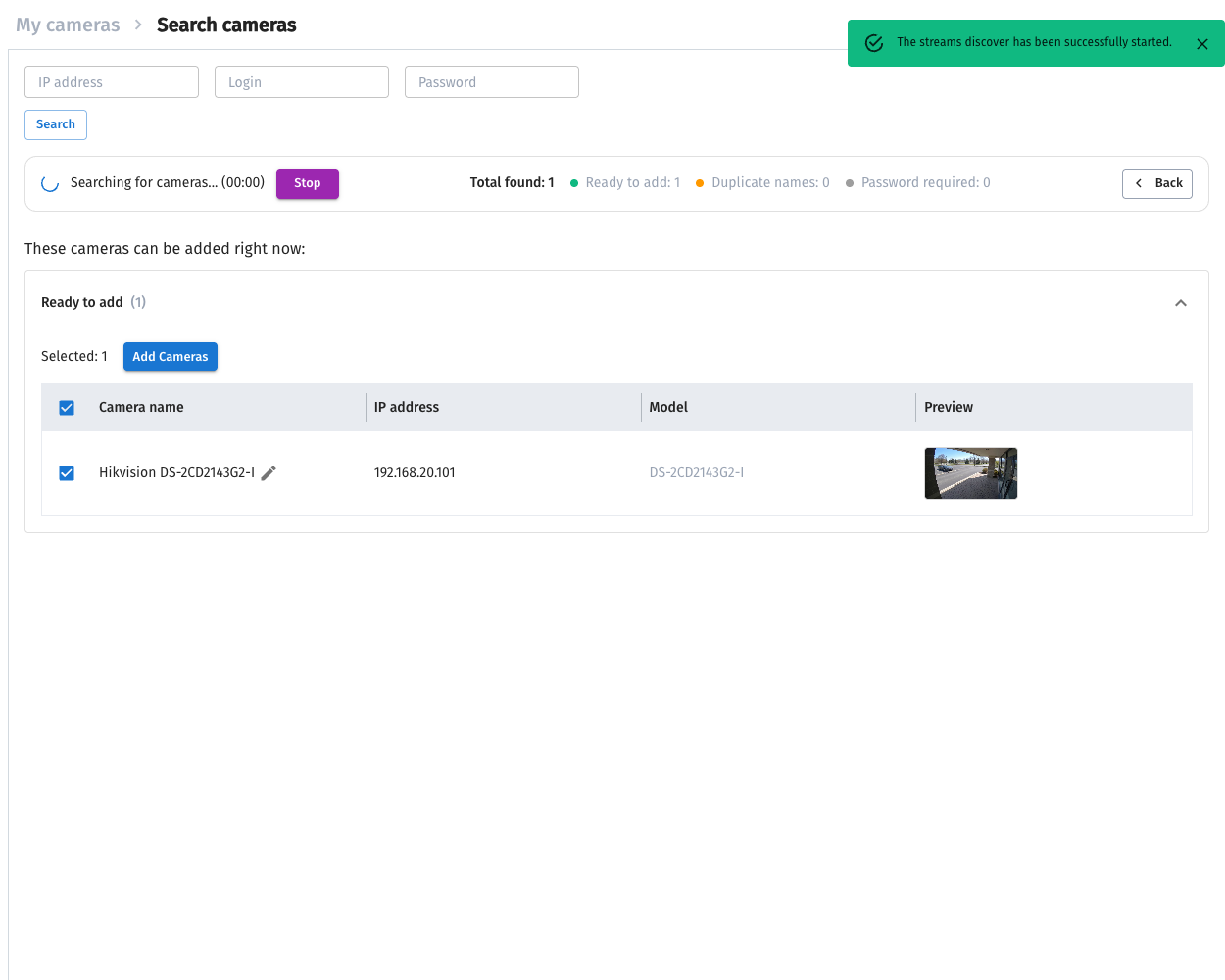
Cameras appear as discovery proceeds.
Some require a login and password before identification or adding.
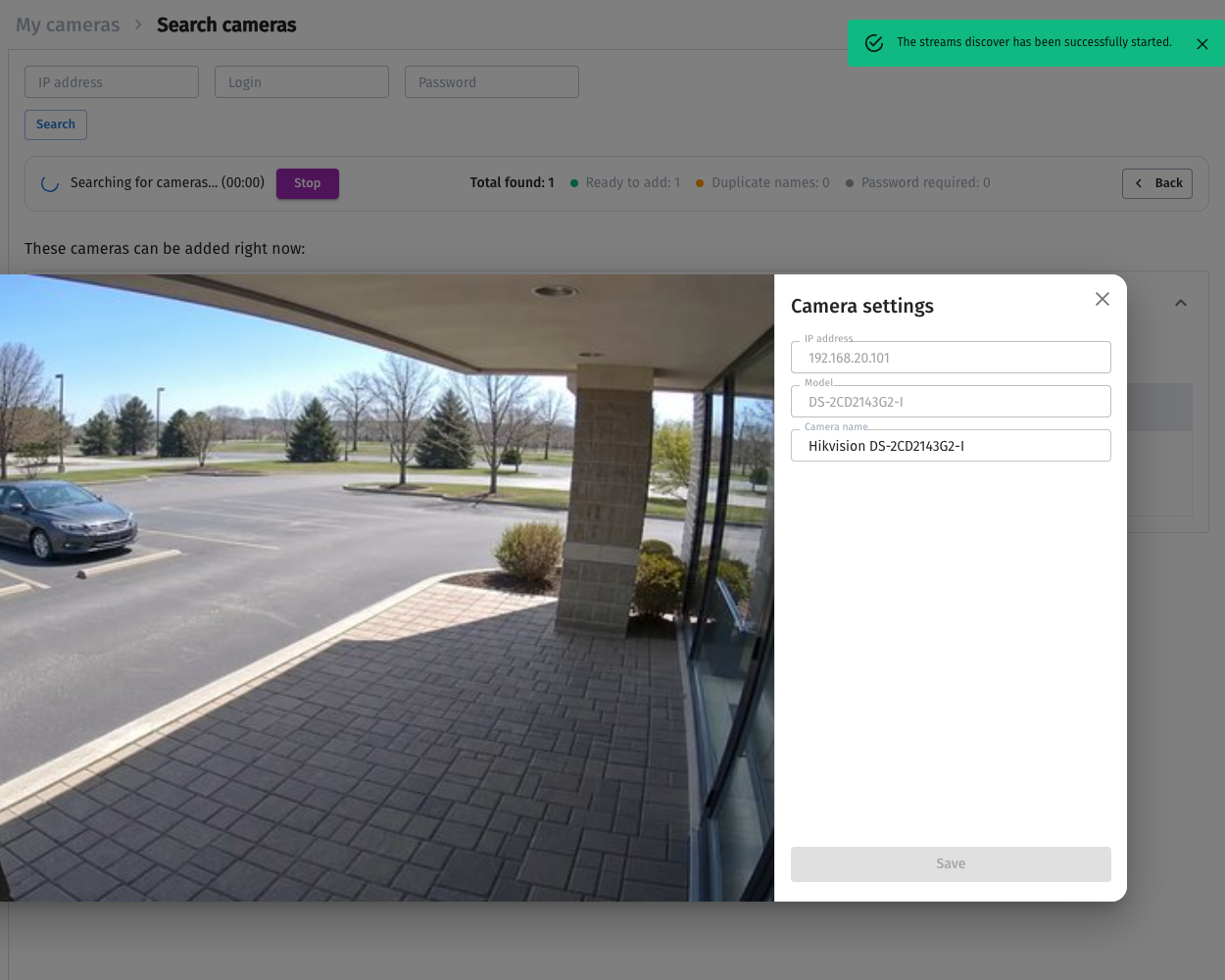
Click a thumbnail for a preview and rename the camera if needed.
-
Select cameras and click Add cameras above the list. If Check video stream addresses opens, select the address and RTSP port for its cameras and confirm.
Selected cameras are added to the default organization with the default preset. Find them in My cameras and set other parameters if needed.
Note
If a camera is missing but you know its IP and credentials, use the form above the list. If Watcher connects to that address, you can add it from discovery. Alternatively, add by IP.
Results show discovered cameras; preview before adding:
Import a camera list
Web menu import requires Watcher administrator permissions.
- Prepare CSV using the import format. Specify existing organizations and check camera names for updates.
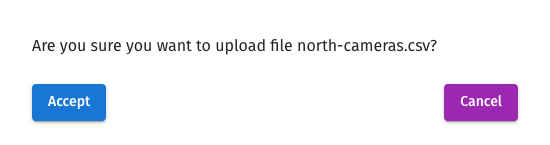
- In My cameras, open the menu beside Add camera, choose Upload CSV and select a file.
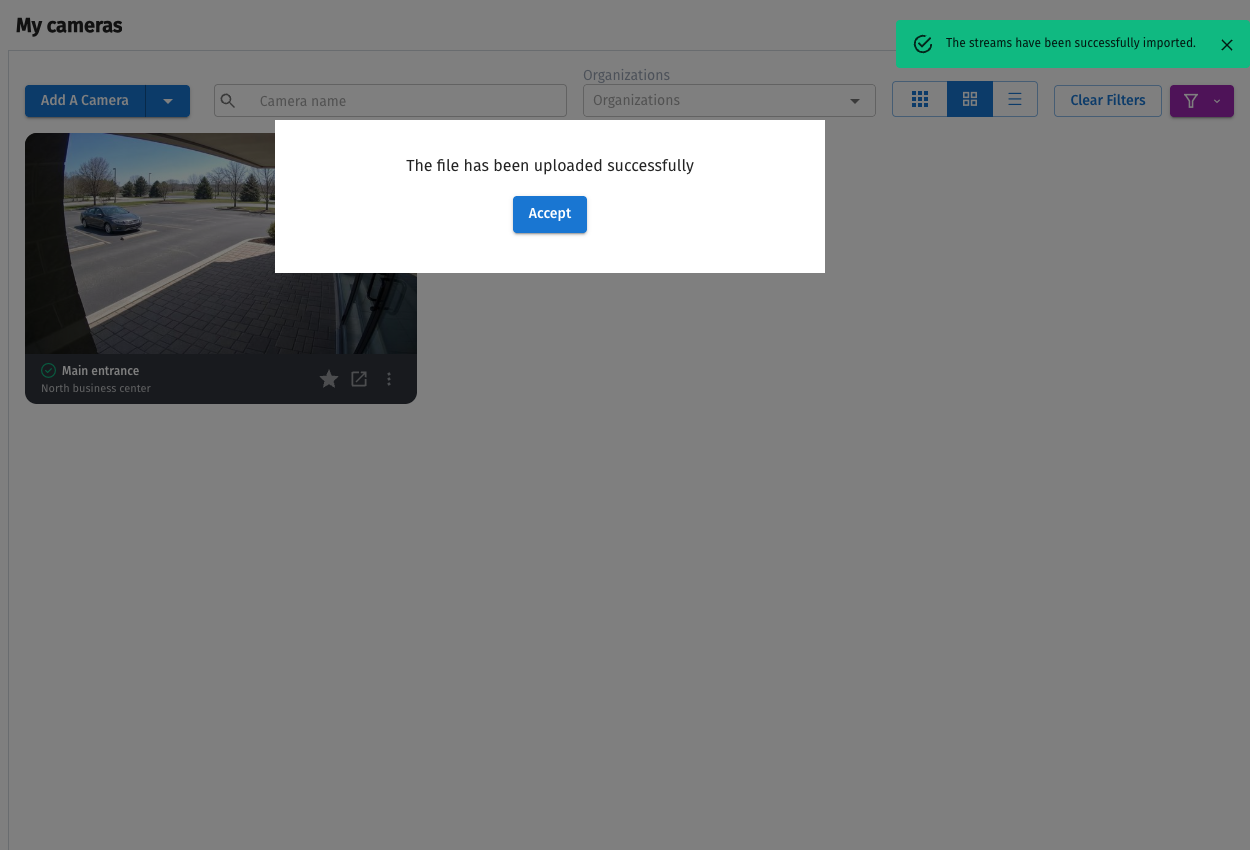
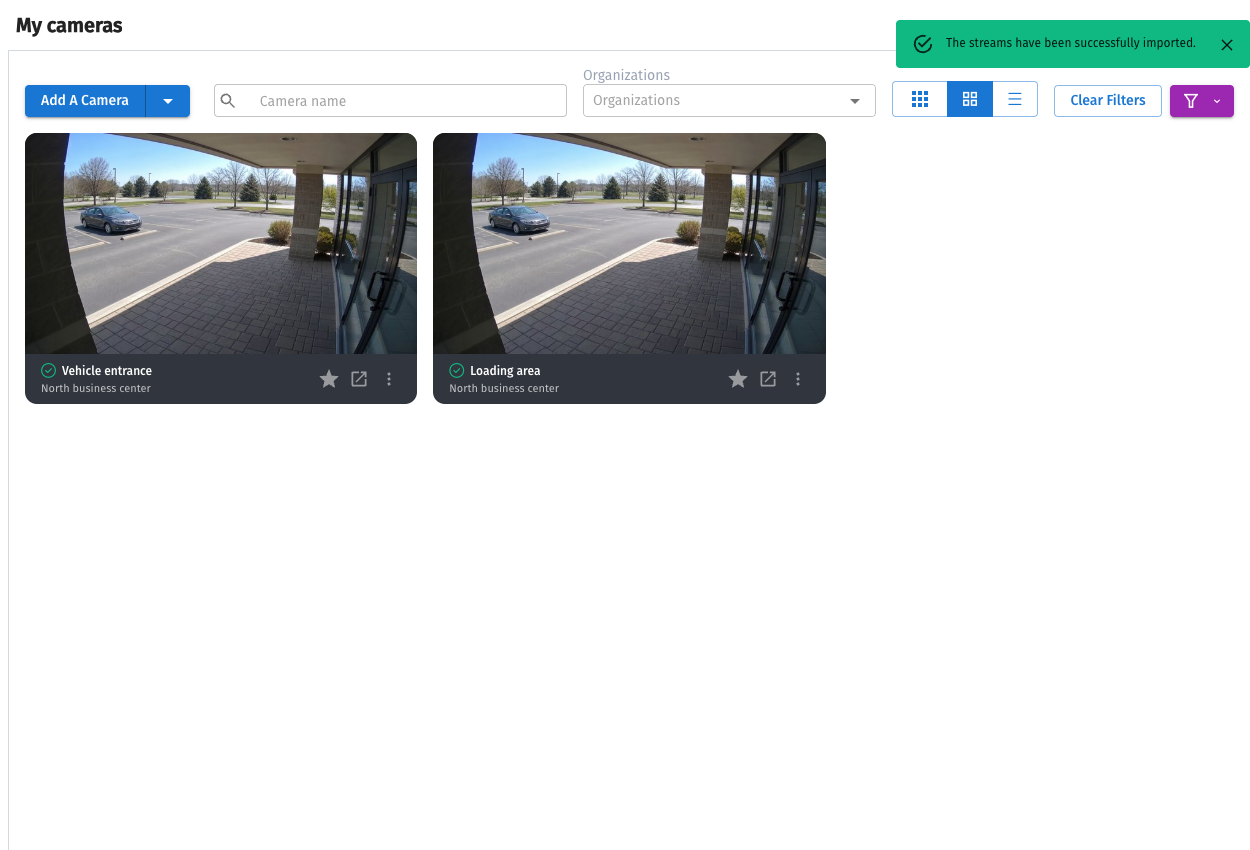
- Confirm the upload in the dialog and wait for the successful-upload message. Close the message, then check the imported cameras in the target organization’s list.
- Open the target organization's camera list and check titles and settings. Check new cameras' video separately: import saves configuration but does not confirm source connectivity.
Add a camera through the Watcher mobile application
Note
These steps describe Android. The iOS application can differ slightly, but the main camera setup steps are the same.
Before adding through the Watcher mobile application, confirm:
- Flussonic Watcher is installed on the phone.
- The account used in the application may edit cameras in at least one organization.
To add a camera:
-
Sign in using credentials provided by the system administrator.
-
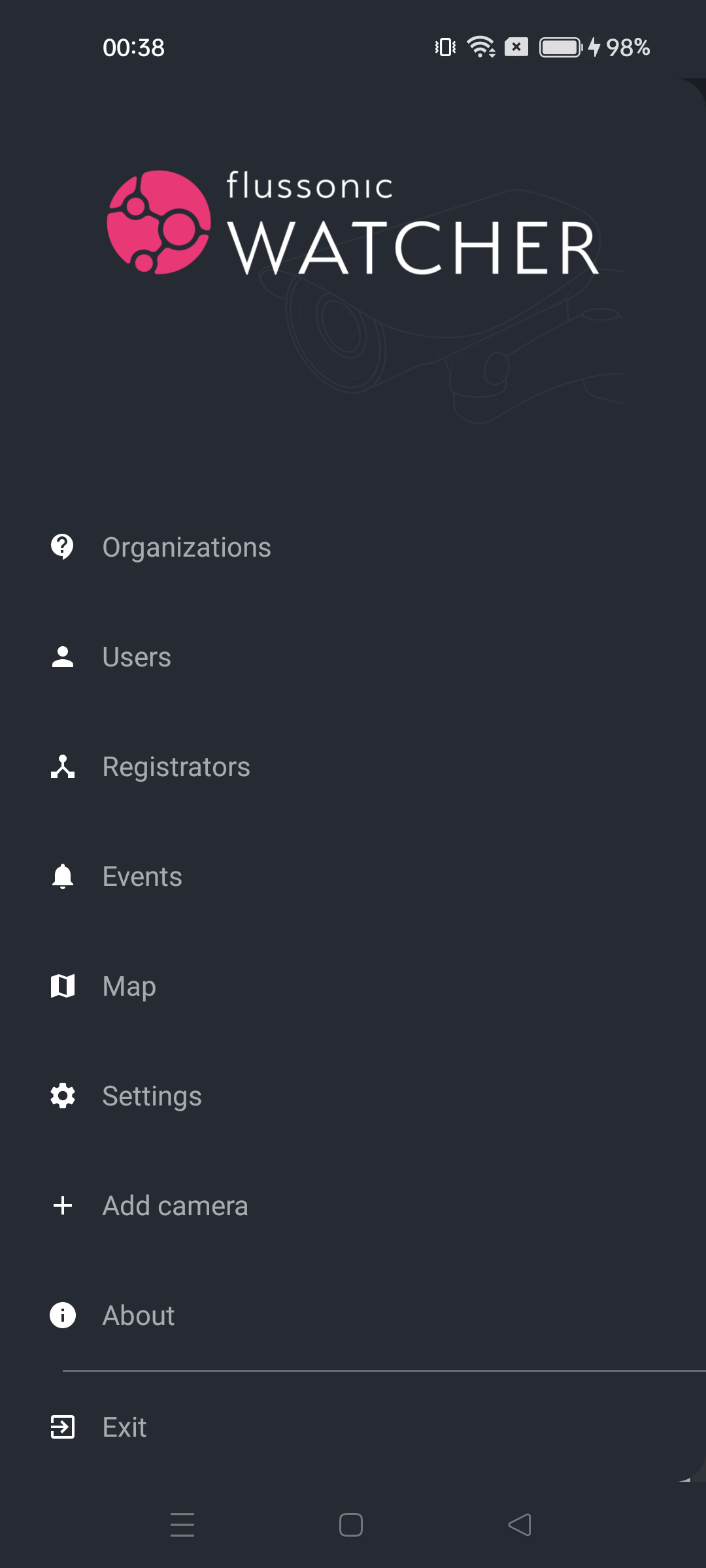
Open the menu and select Add camera.
-
Select a setup method.
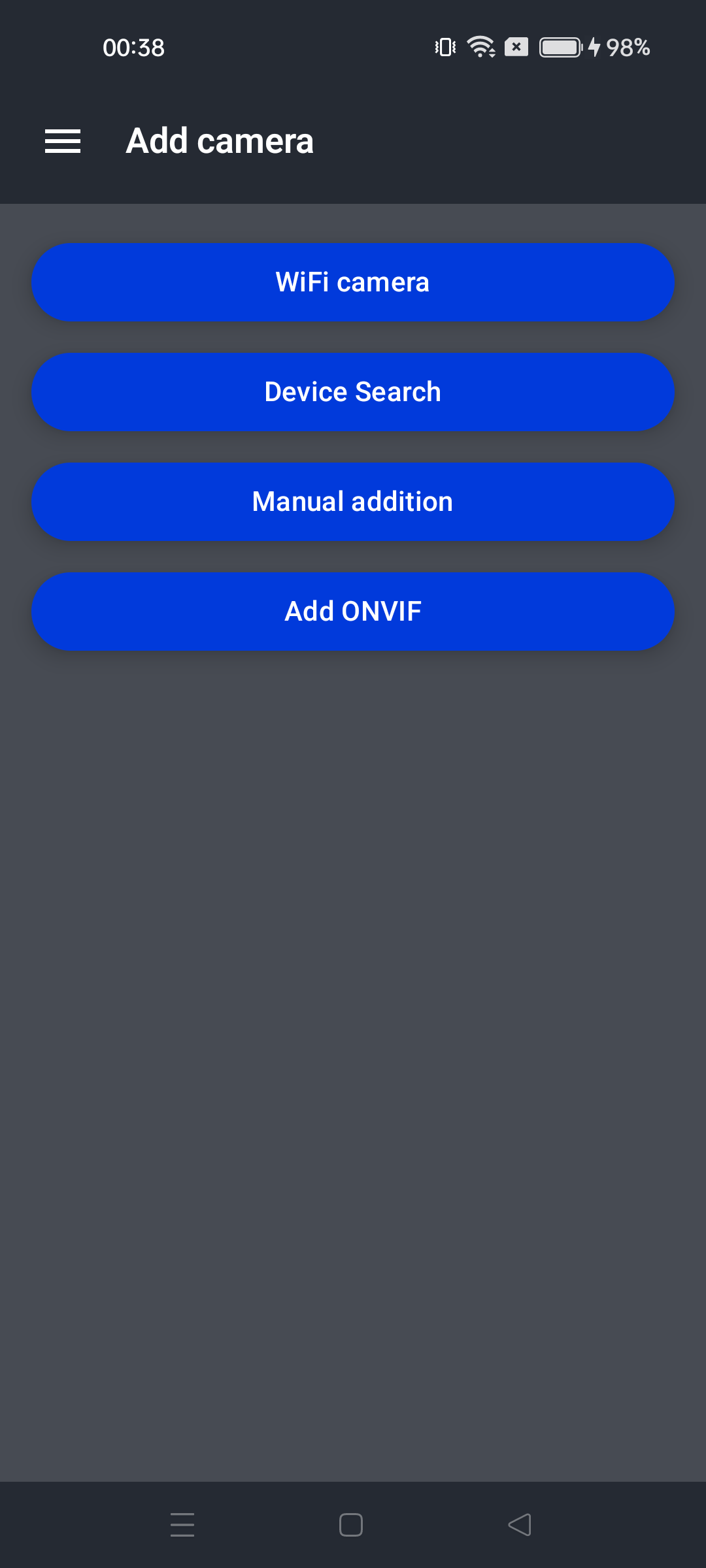
These methods are described below.
Manual setup in Android
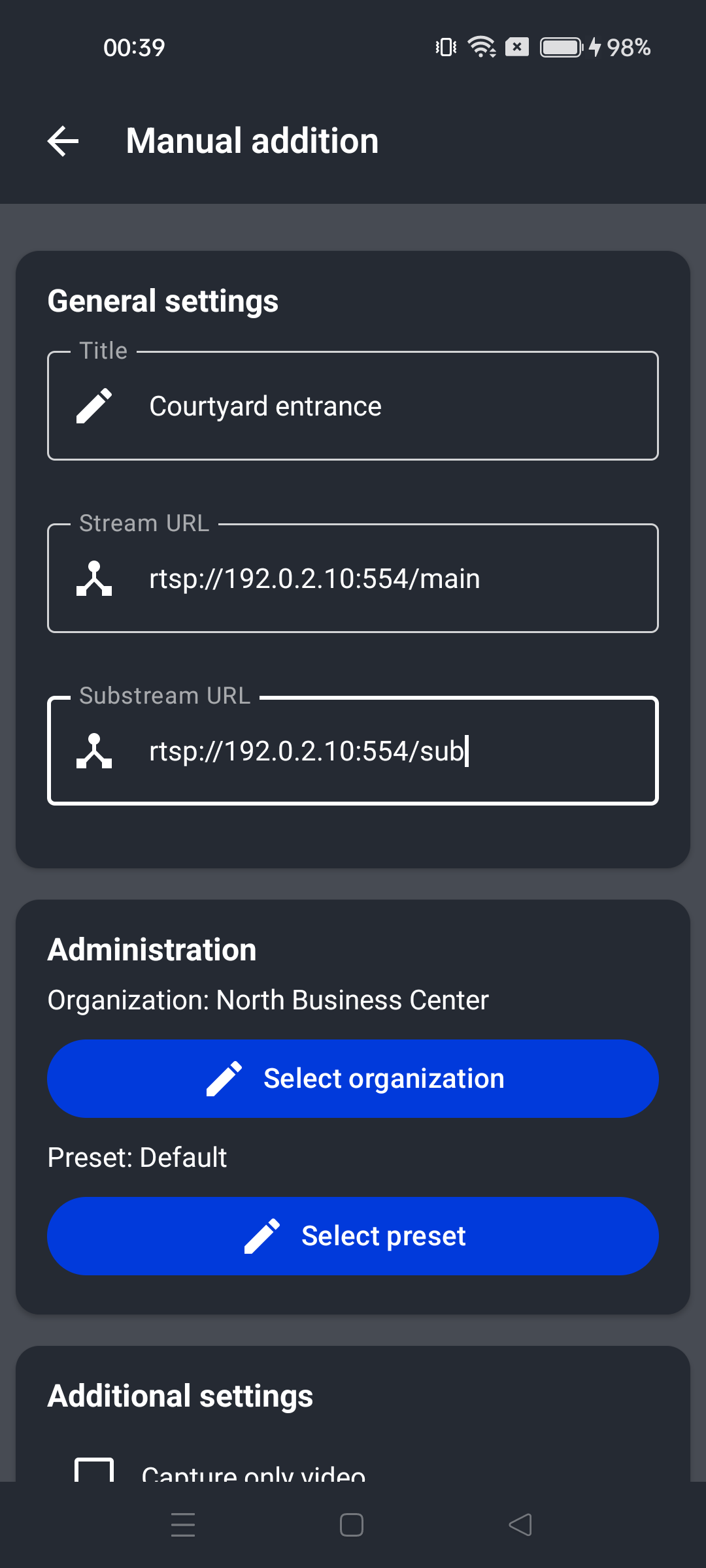
For a known RTSP URL, select Manual setup. Enter the title, Stream URL and, if available, Substream URL. Select organization and preset, then Next at the bottom to save. Open the camera in the list and check the image.
Add a Wi-Fi camera with Iris
Iris Wi-Fi cameras are supplied unactivated: Agent is not linked to a Watcher server. Activate it through the mobile application. Activation connects the camera to the local network and sends a command to join an organization on the Watcher server.
Before activating Iris, confirm the camera has been reset to factory settings.
To add an Iris camera in the application:
-
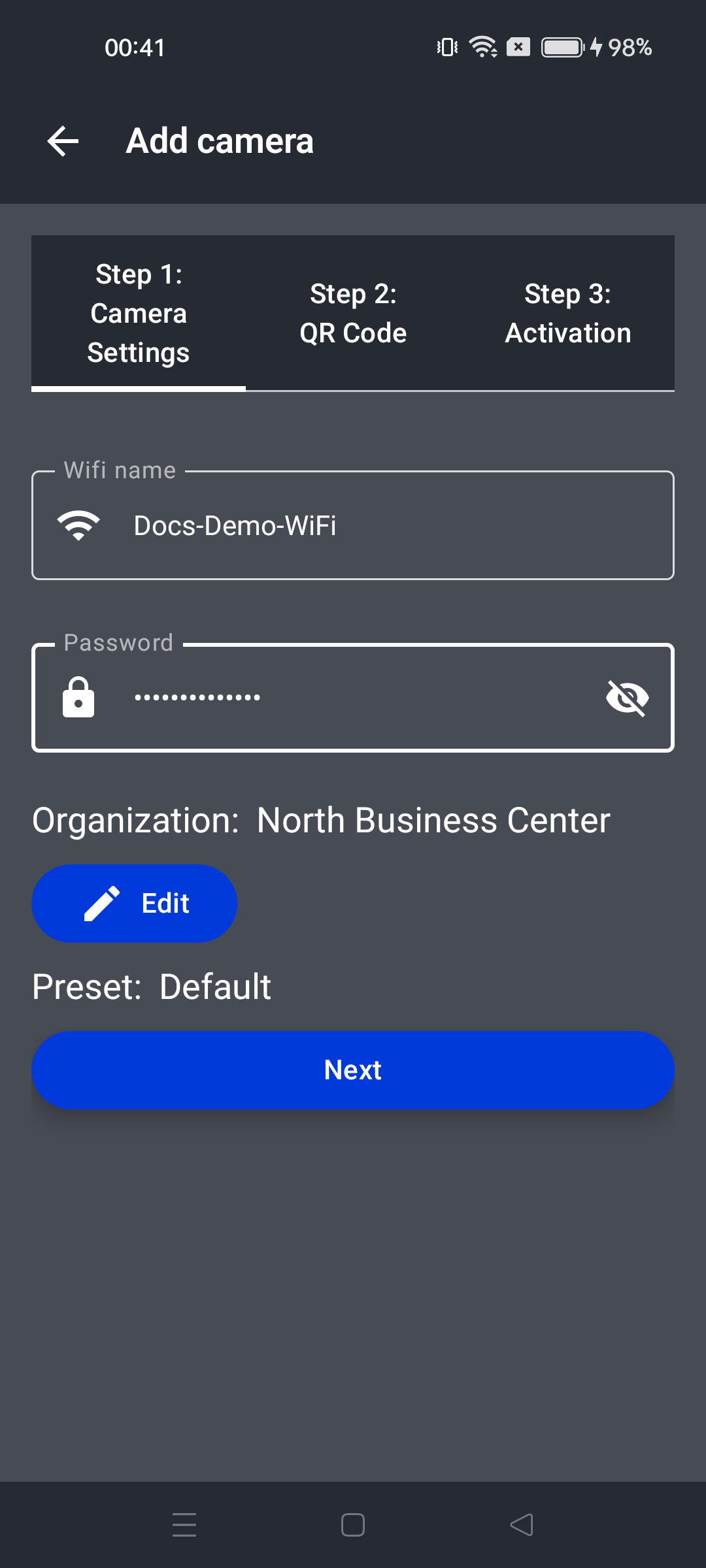
Choose Wi-Fi camera in camera setup.
-
Check the Wi-Fi network name and enter its password.
-
On the same step, check Organization and Preset. If alternatives exist, select the intended organization and recording settings.
-
Click Next. A QR code appears on the phone.
-
Show it to the camera. A camera ready to scan periodically plays a voice prompt. If it does not, check power and try a factory reset.
-
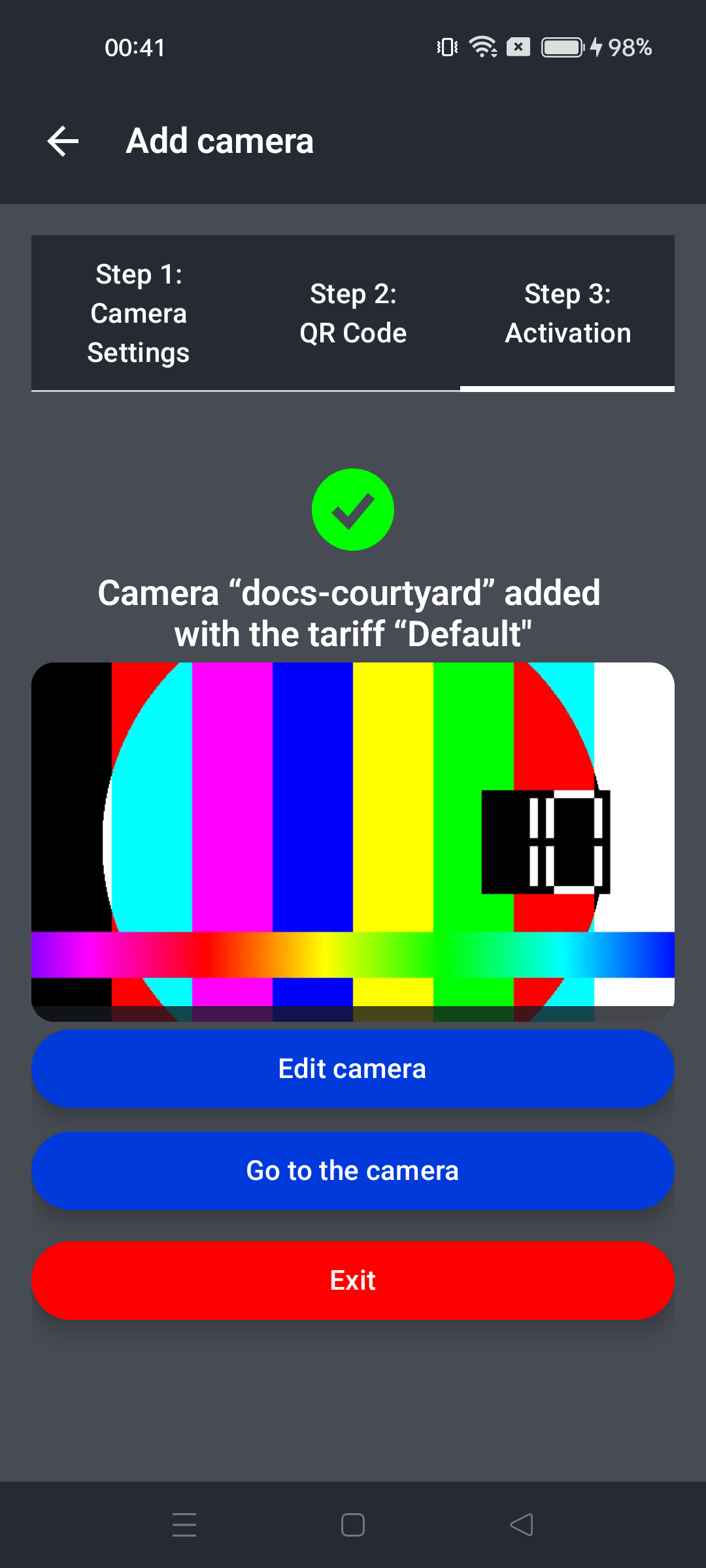
The camera announces successful scanning and Wi-Fi connection. You can then watch video, activate another camera or return home.
To change its title or parameters afterward, click Edit the camera.
Note
Frames may take time to arrive after connection. Check connection state if the image is absent; no fixed connection time is guaranteed.
Discover Agent devices connected by Ethernet
Unactivated Agent cameras, with or without Iris, connected by Ethernet can be discovered automatically or added by IP. Discovery uses MDNS via a UDP request to 224.0.0.251.
Note
Configure the network to allow MDNS. For example, disable IGMP snooping on the router.
Cameras must share the phone's local network.
Adding this way links Agent to your Watcher.
To activate Agent on an Ethernet camera:
-
Select Device search. The application scans the local network and lists cameras.
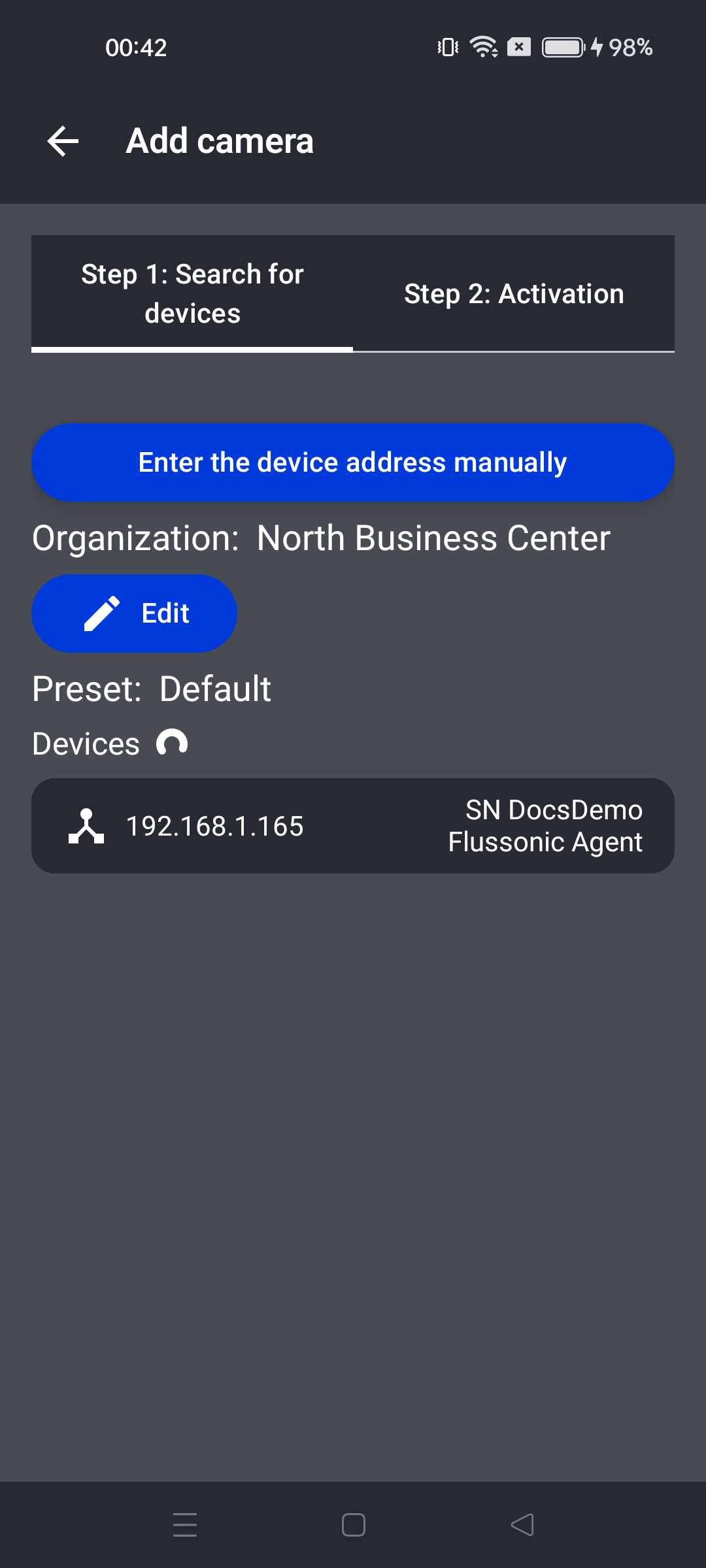
Discovery continues while this screen is open. If the camera is missing but its IP address is known, tap Enter the device address manually and enter the address.
-
On the first discovery step, check Organization and Preset, changing them before activation if needed. Select a device or enter its address manually.
-
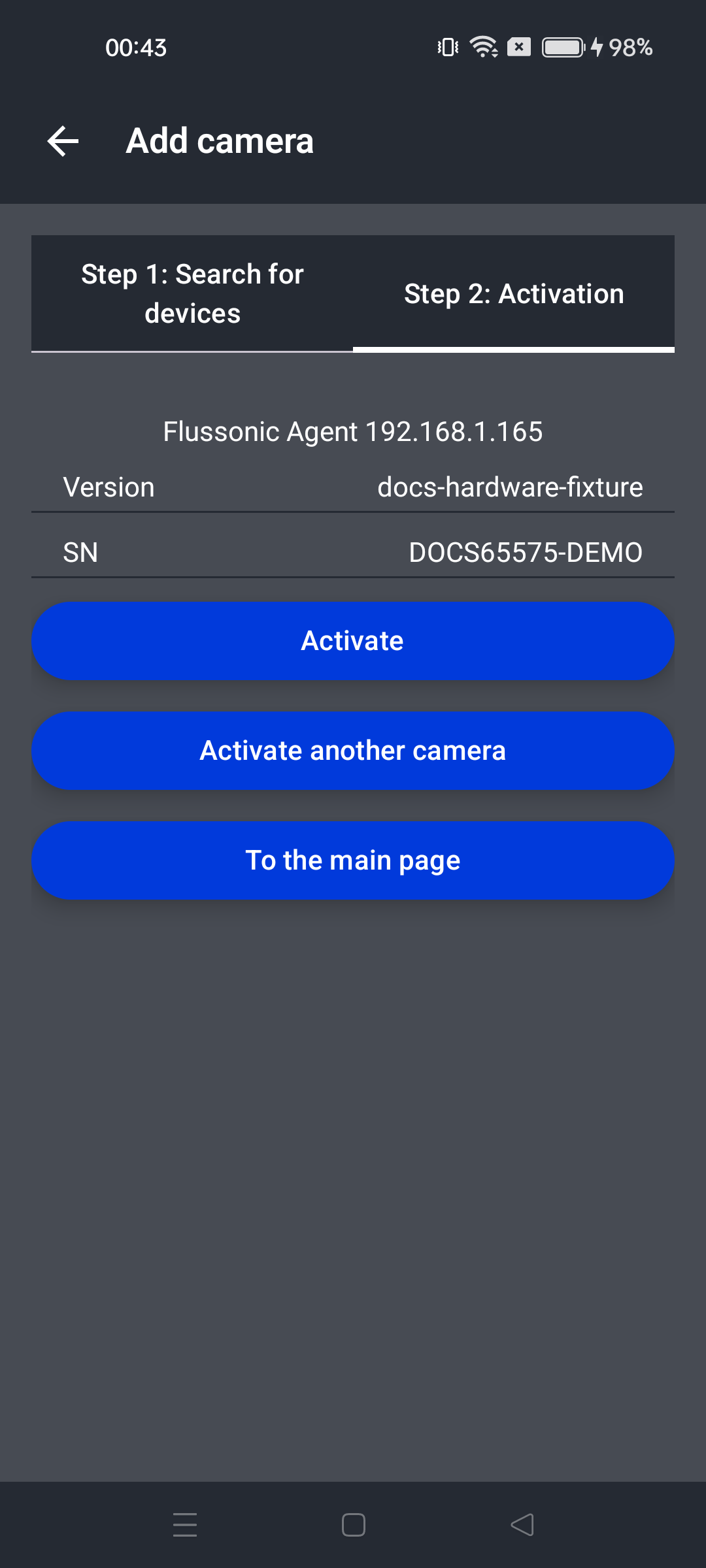
On the next screen, click Activate.
-
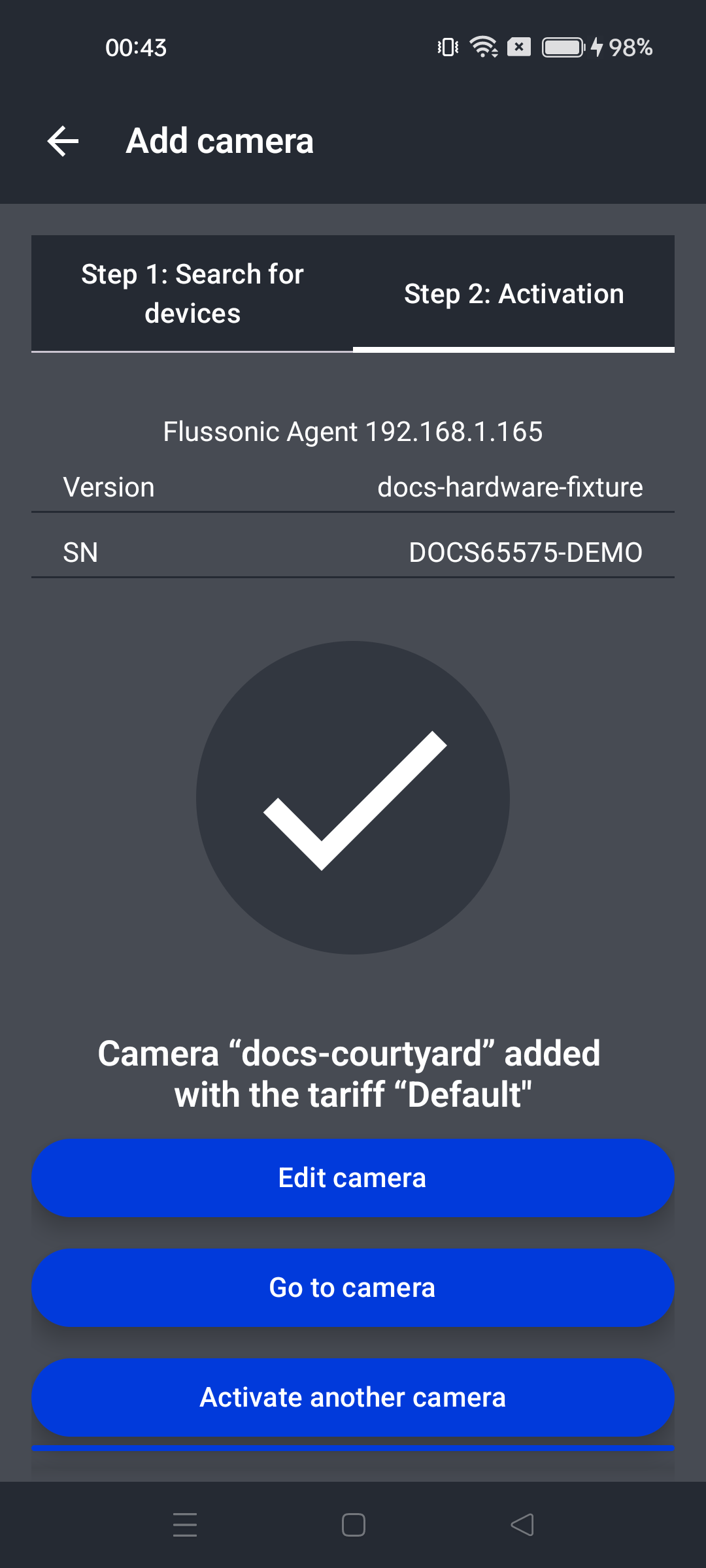
After success, the application displays confirmation and offers video viewing, another activation or returning home.
Note
Frames may take time to arrive after connection. Check connection state if the image is absent; no fixed connection time is guaranteed.
ONVIF search
Mobile ONVIF discovery follows the same principle as web discovery.
Warning
Unlike the mobile methods above, ONVIF discovery runs on the Watcher management server's network, not the phone's network.
In Android:
-
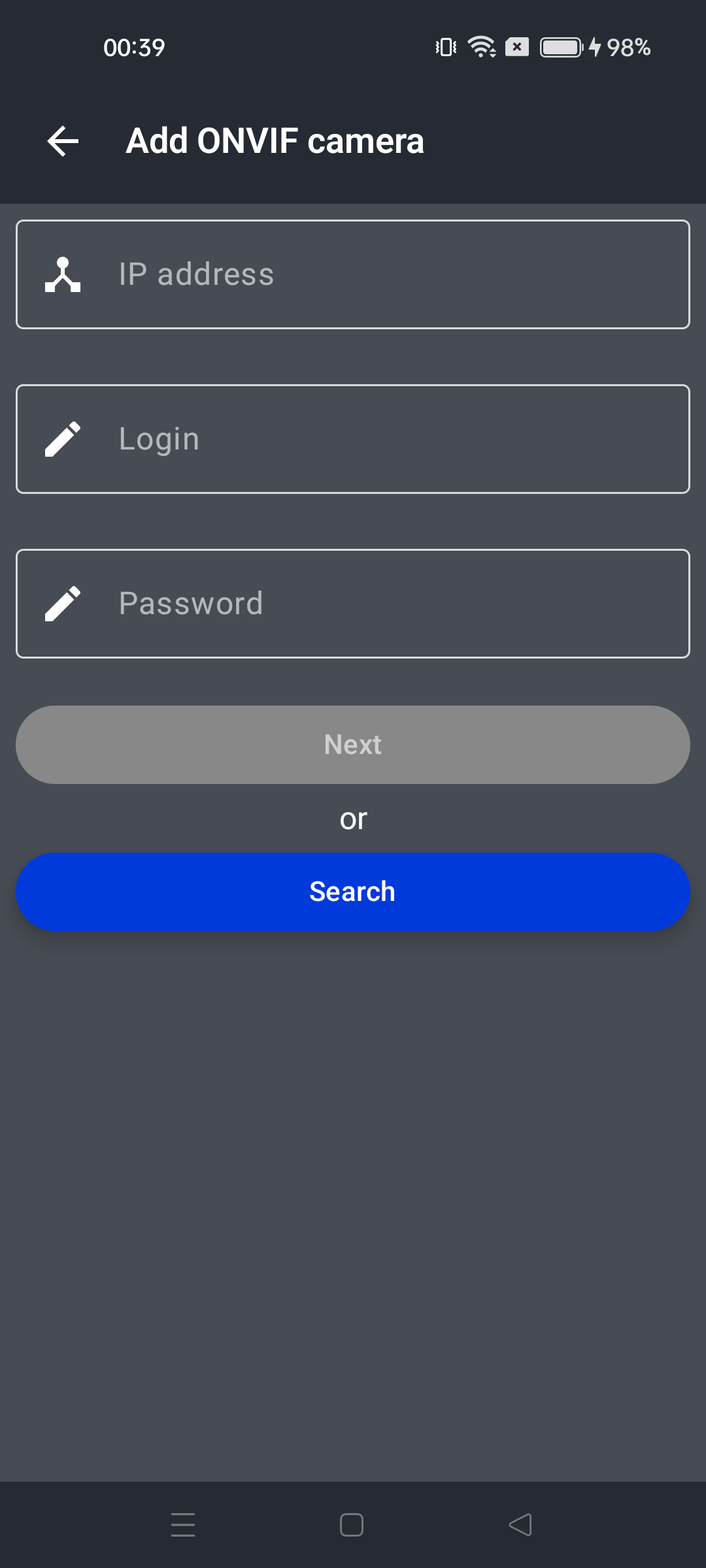
Select Add ONVIF. To check an address, enter IP address, login and password and click Next. To discover cameras, click Search. ONVIF credentials can differ from camera web interface credentials.
-
Wait for results. Select cameras under Ready to add. Cameras needing a password, name correction or error resolution appear separately.
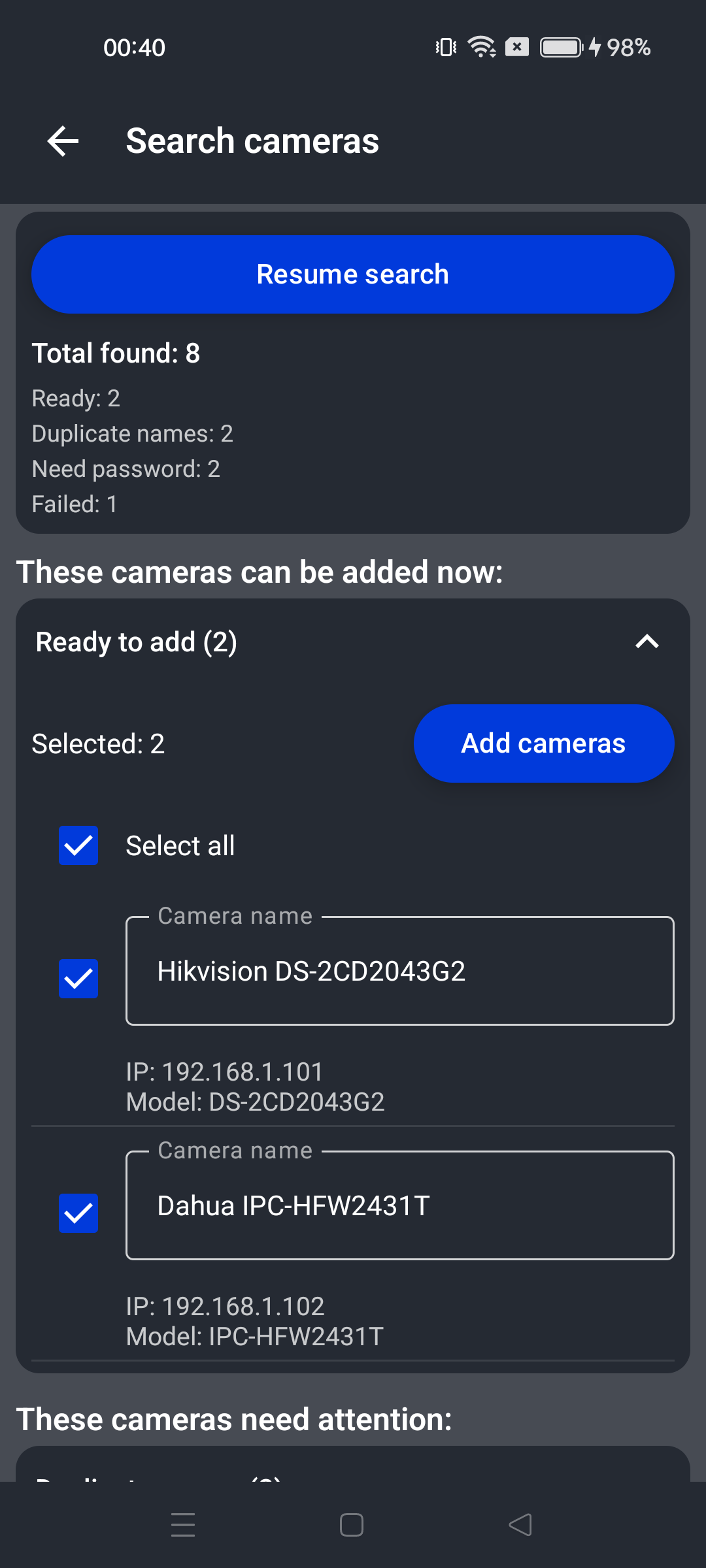
-
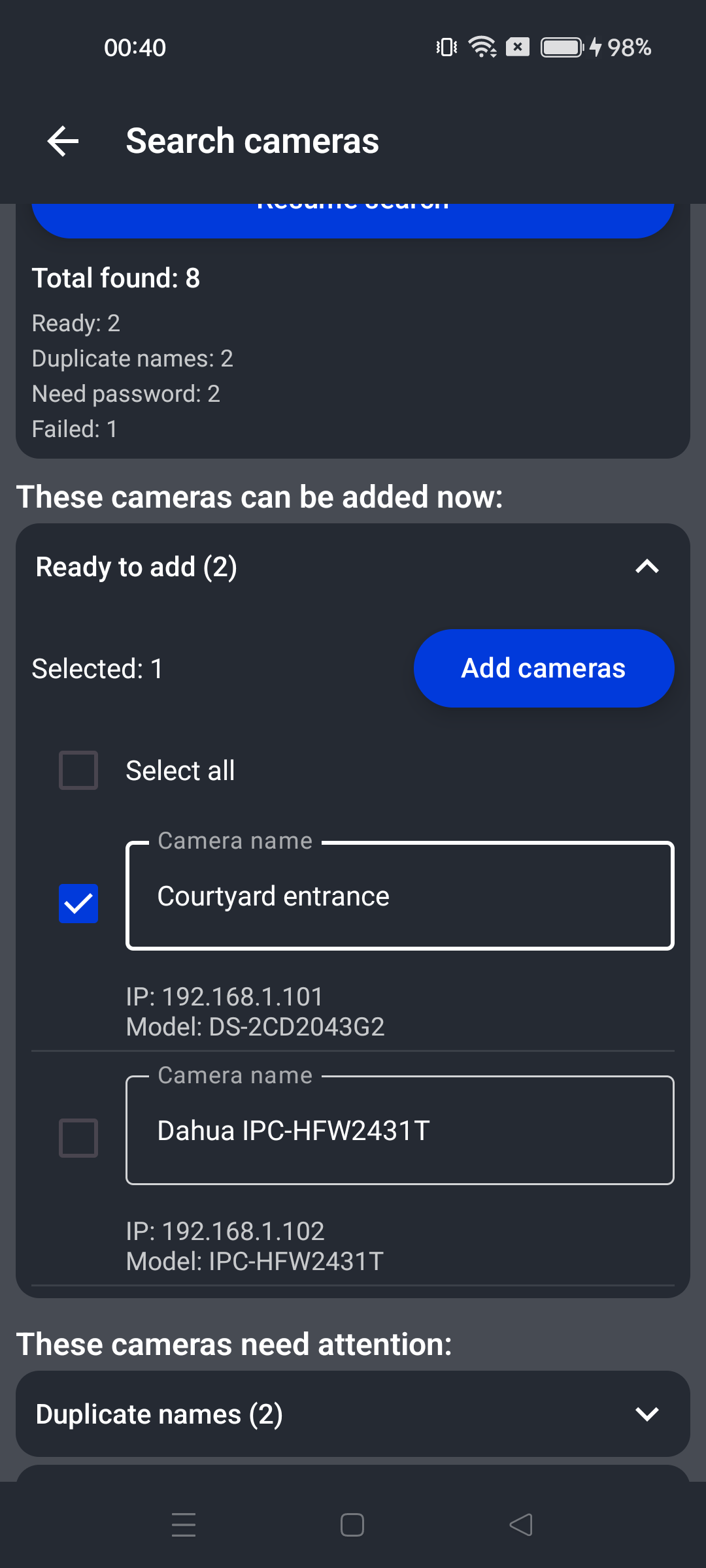
Change Camera name in the list if needed and check the selected count. Click Add cameras.
-
After one camera is saved, it opens; after multiple cameras, the list opens. Check organization, preset and image. This method chooses defaults: the default organization or first editable organization, followed by its default preset or first available preset.
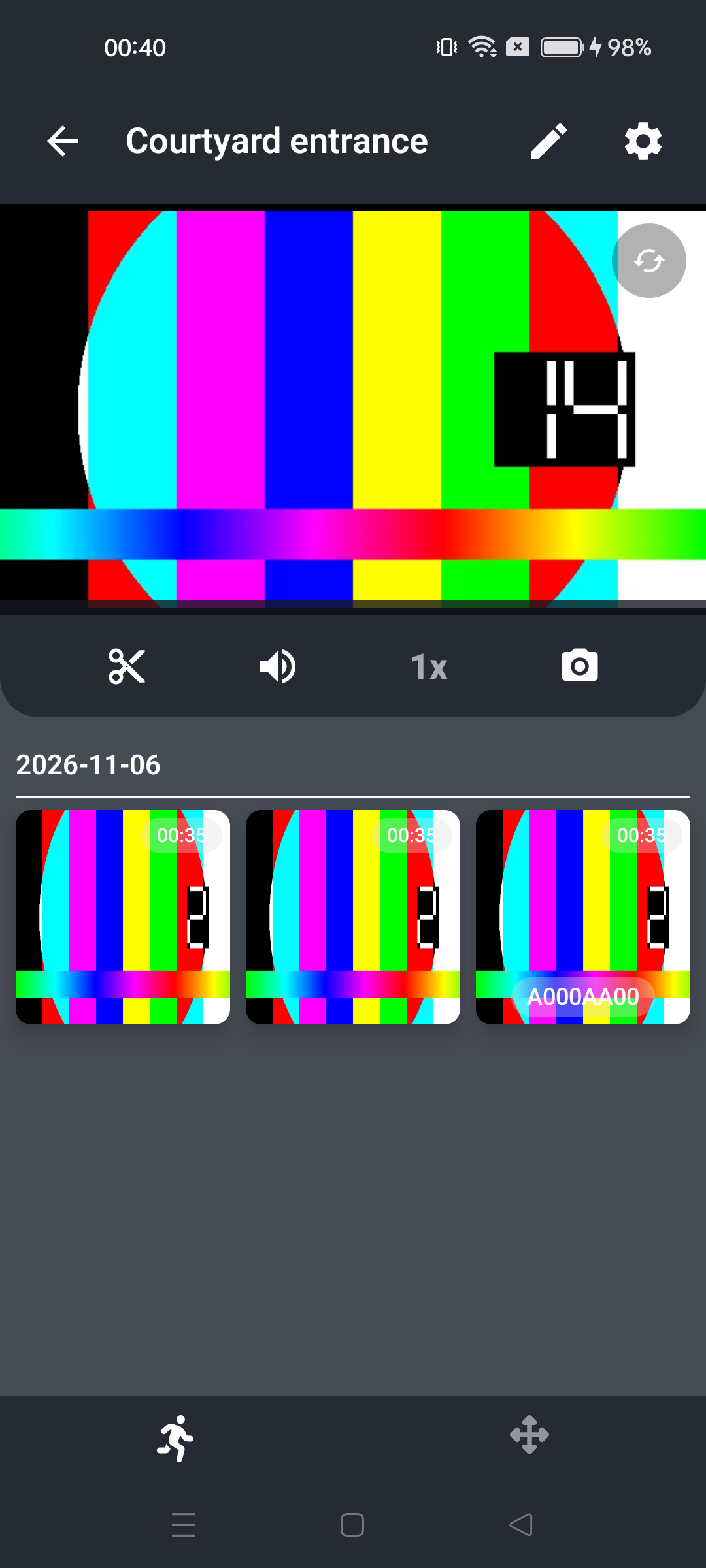
If an error remains instead of video, check connection state and stream availability. Adding a camera record does not guarantee video ingest.
Delete a camera
To delete a camera:
- In Android, open the camera, tap the gear and Delete in Camera settings. Check the camera before submitting. The command's location is shown in Android notification settings; that image shows the button before deletion.
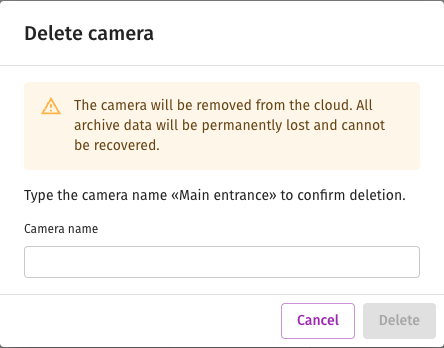
- In the web interface, use the trash icon on a tile, or Delete in the list actions beside the name. See display modes. You can also click Delete in camera settings.